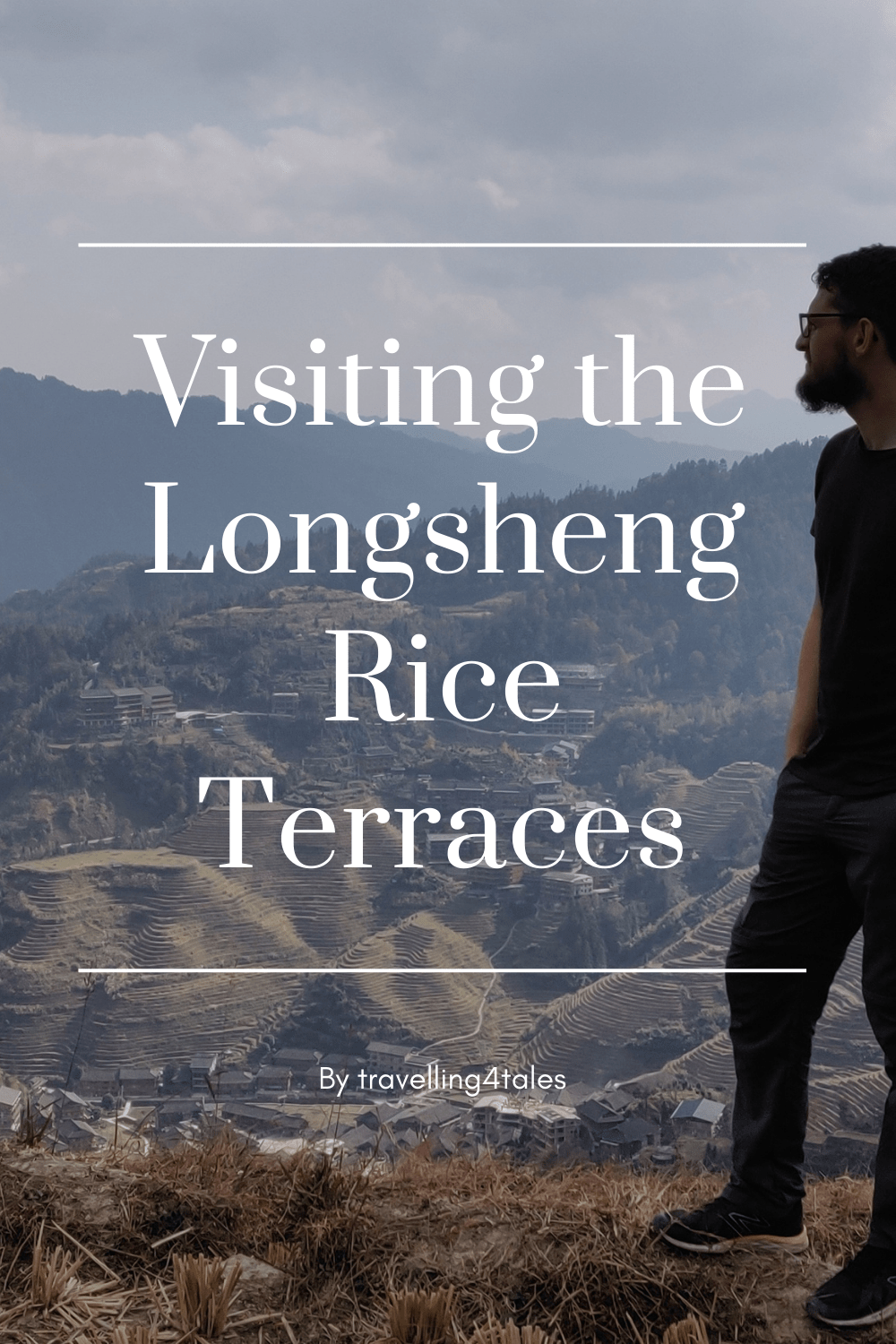
The Dragon’s Backbone terraces or Longji rice terraces, located in Longsheng, a couple of hours from Guilin, are incredible structures crafted by the local minorities on the mountainside. There are many sections you can visit, depending on how long you have you can concentrate on one or you can stay overnight and get a more authentic experience.
In our case, as we were unsure on how to approach going to the Longji rice terraces on our own and how long we should spend, we booked a tour to visit them from our hostel. This was our day trip experience.
We got picked up from the hostel at 8:30 am, we got crammed into a tiny minivan, overfilled with tourists (mainly national) and a 2.5h journey to the village of Huangluo.
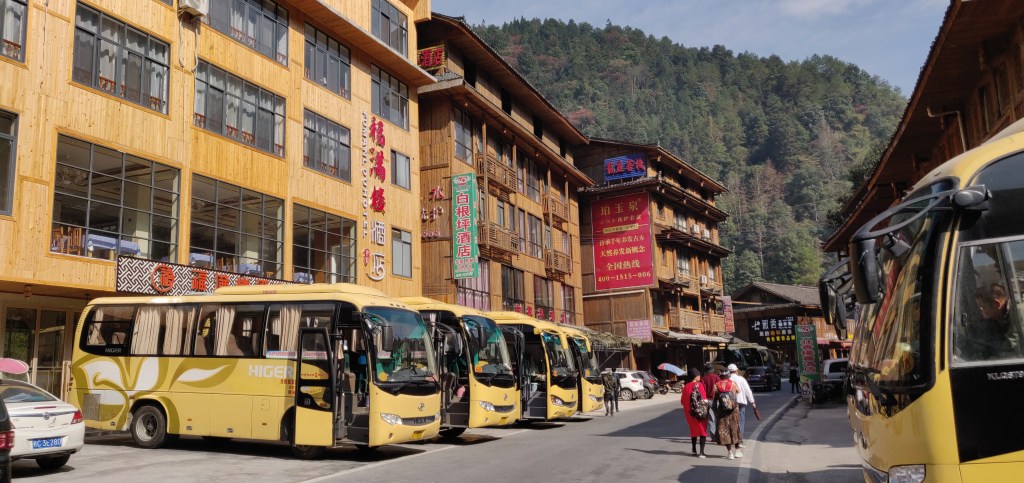
As we got out of the minivan in Huangluo we were flooded by traditionally dressed Yao women selling trinkets, also our driver kept trying to sell us tickets to watch a “Long hair show”. We knew it was just for tourist entertainment so we politely refused.
We walked around a bit, lots of retired Yao women set up stalls all along the village and were keen to sell anything to us. As we ventured further away from the main area, there were lots of new buildings (I assume for hotels) surrounding the village.
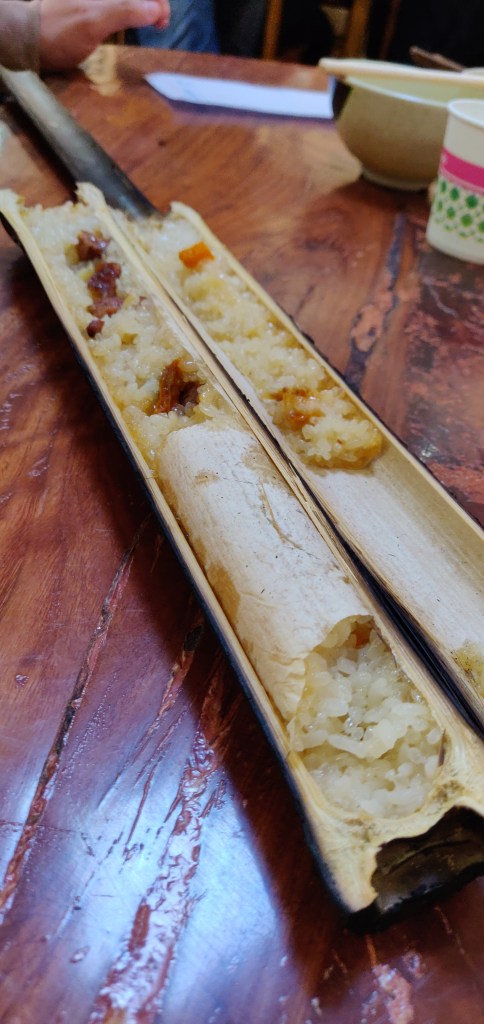
We walked back (you can literally walk the village in 5 minutes) and our driver told us to go for a lunch break with the rest of the tourists from our minivan. All restaurants were relying on the influx of tourists visiting the village for their income and so we went to one to try the traditional Bamboo rice; soft, fluffy rice cooked inside a bamboo stick. After lunch, we got back into our minivan and proceeded to travel to the Longji rice terraces.
Conclusion of Huangluo Yao minority village:
A tourist trap: The experience at the Yao village did certainly not feel authentic, we felt like we were there just to spend our money just before reaching the rice terraces, it genuinely felt like a set-up.
Longji Rice Terraces (Dragon’s Back Rice Terraces)
Only 30 minutes later, we arrived at Dazhai’s car park, northeast side of the Longji terraces scenic area. As we started walking up to the village we already realized it was way more authentic than Huangluo, there were chickens running loose on the steep stairs leading to the top of the many hills, children playing by their homes, and villagers walking by with fresh vegetables in baskets ready to be cooked for dinner. There are many routes to follow once you reach Dazhai, you can visit the Golden Buddha Peak (tallest peak of the scenic area, great views) or other areas of interest such as the Thousand-layer terrace or even smaller peaks that my translator could not translate. We opted for walking up to the Golden Buddha Peak (there is also a cable car but we do like a challenge).
The walk up wasn’t easy, it was hot, humid and we had a mozzie sleepless night before so we were already quite tired. As we were approaching we realized most people go up on the cable car and descend by walk. The whole walk up was 1h.
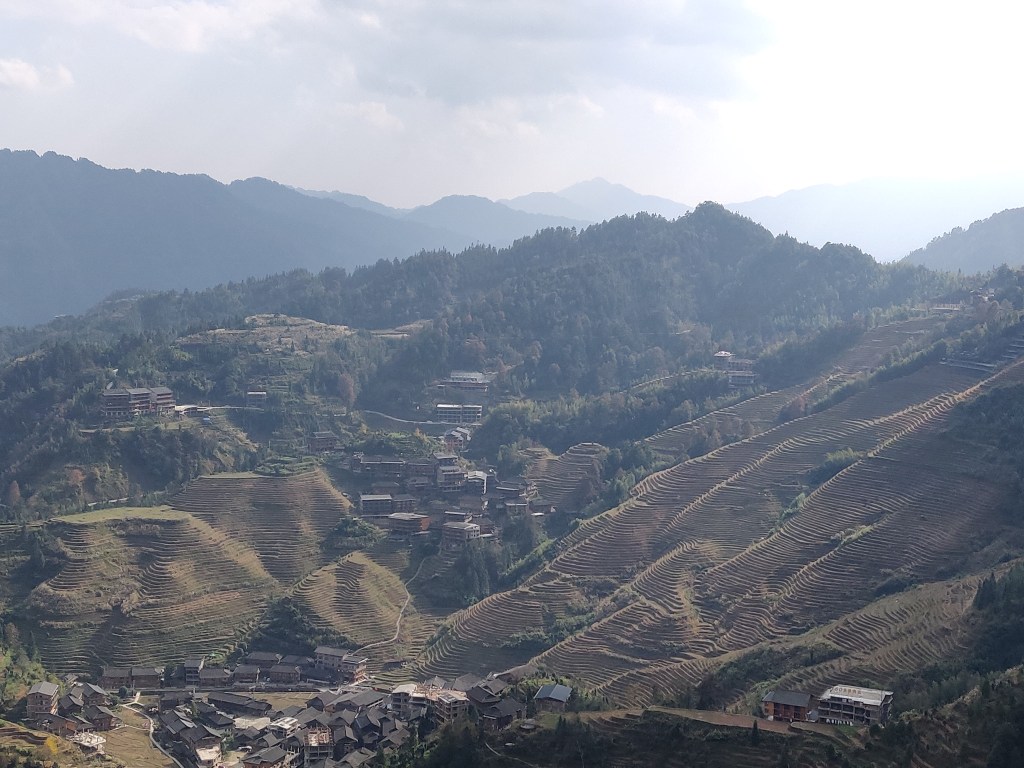
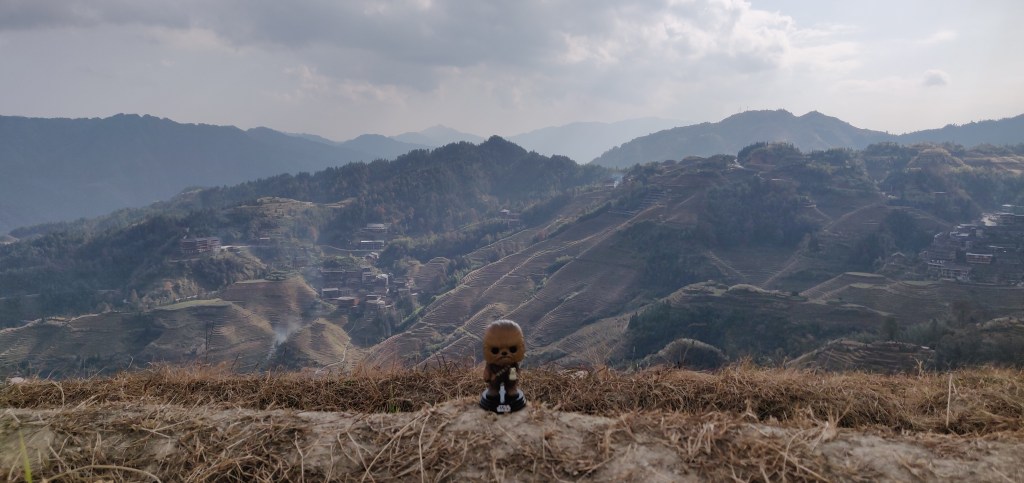
Once we reached the summit, we found another touristy set-up, you can hire ethnic minority clothes to take photos in front of the breathtaking rice terraces, you can get a professional photographer, you can buy souvenirs or, like us, you can just take it all in and take photos. We visited in November so it wasn’t particularly busy and the rice had already been harvested so the landscape was brown but still a beautiful and humbling to experience.
We walked back down and 3h back to Guilin.
Conclusion of Longji Rice Terraces:
We absolutely loved the experience of hiking up to the Golden Buddha peak and through Dazhai. Although there were new developments being built (probably hotels), the village was still quite traditional and the rice terraces were just incredible to watch, we were lucky enough to see them completely (no fog) although not in their green royalness.
Our regret was not doing an overnight stay at one of the less-visited villages so we could explore the west side of the scenic area over two days.
 travelling4tales.travel.blog