Featured

Hanoi Travel Guide

Introduction

We always wondered what Vietnam would be like, more than ever on that train Hanoi-bound from Nanning. In the West, we always have a preconceived idea of China, Japan, Korea and Thailand from movies and media. However, countries like Vietnam or Cambodia are, sadly, best known for their sombre history, although this is radically changing and they are quickly becoming favourite international tourist destinations. 

As landscapes changed through the tiny train windows and daylight started to fade, the anticipation of learning more about this incredible country kept us awake. A few hours (and a late border crossing) later, we arrived at Hanoi Gia Lam station (on the wrong side of town and a very long walk away from our accommodation).

Our first impression of Hanoi was very wholesome, at 5:30 am we walked through the smells of coriander and broth simmering in street carts, offering freshly made Phở, lively Vietnamese pop music in a nearby park where a fitness group danced to their morning exercises, and the distant hustle and bustle sound of a fresh food market. As we walked to our hostel, we crossed the Cầu Chương Dương bridge over the Red River, hundreds of scooters struggled through to get to their destinations, the town was waking up! (and so were we).

We said goodbye to our train friends (with whom we ended up travelling on and off all the way to Cambodia and have become very good friends of ours) and we got to our hostel where we got welcomed with freshly brewed and house-roasted Da Lat highlands coffee and a Bahn mi. 

This was our incredible welcome to Hanoi!
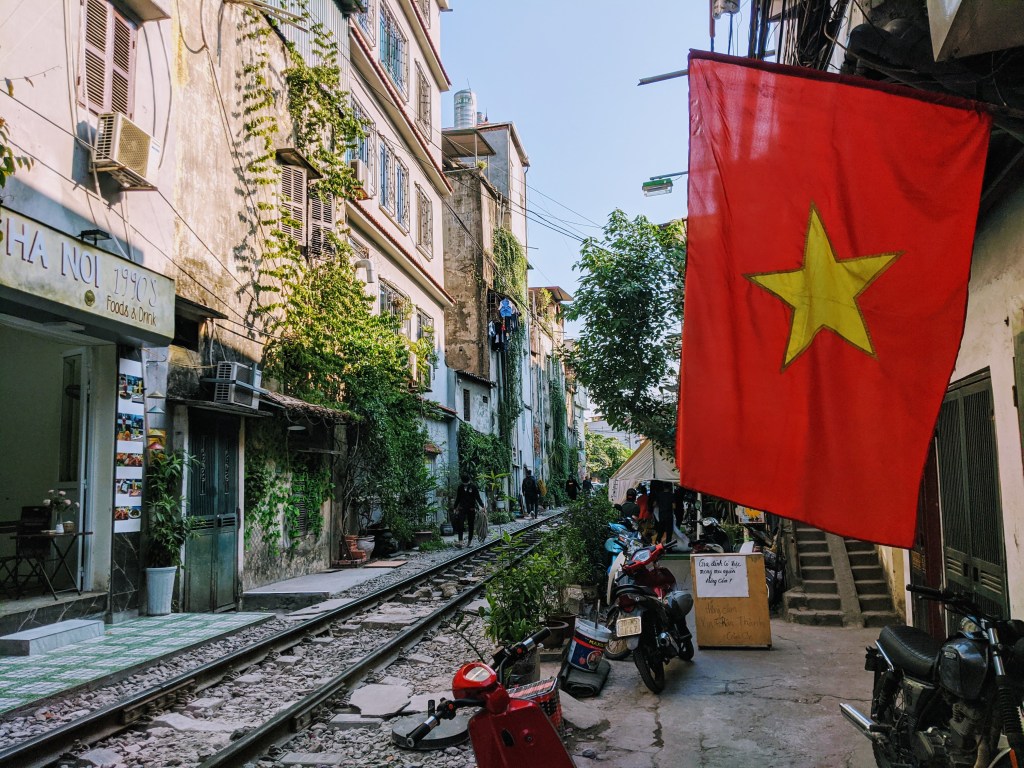
Train Street in Hanoi

Best time to visit

Hanoi can get chilly so it’s best to avoid going during the winter from December to March. We travelled in November and had a comfortable temperature. July to September can be rainy.

How to get in and around Hanoi

Moving around Hanoi can get a little confusing, but it’s completely doable by public transport (or even Xe om (riding a motorcycle with a local).

There is an international airport in Hanoi (Noi Bai International Airport) , it is well connected by public transport but you will have to download the BusMap app to work out the routes.

There are also two main train stations: Ga Hà Nội which is in the centre which connects with Saigon and Sa Pa and Nhà Máy Xe Lửa Gia Lâm, the one we arrived at, quite far away from the centre and we had to cross a scary bridge by walk to get into town (but it was the only one connecting from Nanning, China). 

There are also a few bus stations scattered around the city but we used a private bus instead with 12go Asia( https://12go.asia/en ), local bus stations are likely cheaper but we were newbies when we arrived so we went for the easy option then. 

To move within the city we mainly walked which ended up in very painful calves or we used Grab/ BusMap or even Google Maps to check for routes. There is the option to download the Hanoibus app via link http://timbus.vn/

Friendly note: The bus is paid once you enter so make sure to have small notes (as of 2019 it costed around 7000 VND)

Personal choice: Download the Grab app: This app was literally our life saver, basically Uber in Vietnam, we never had a bad experience with it. 

What to do in Hanoi

There is plenty to do in this amazing city for all types of travellers, for historians, foodies, temple chasers and social butterflies!

What to expect? A complete sensorial experience full of aromas, tastes and (definitely) noises and colours. But it was one of our favourite cities (in fact, the one where we spent the most time) So you are in for a treat!

Old Quarter

Hanoi’s Old Quarter is not an activity as such, but its an experience worth living. Walking through the Old quarter, the living heart of Hanoi, you can picture what the city might have been like decades ago. The narrow streets are filled with markets selling absolutely anything you can imagine with locals and expats alike bartering whilst trying to allow hundreds of scooters through.


What we loved the most about the Old Quarter is that it is divided by guilds; there are apparently up to 36 guild streets specialised in different trades such as bamboo wares or copper wares (and when we went there was even a full street selling Christmas decorations)

Hit the Streets

Following through the Old Quarter, a recommended thing to do (if you can) is just walk the streets, make your own walking tour or pick a walking tour, there are great foodie ones too!. Below are our favourite highlights to design a walking tour around.

Hoan Kiem Lake and Ngoc Son Temple

Located in the city centre, Hoan Kiem Lake or  Lake of the Returned Sword is a gorgeous must, it is a peaceful oasis within the bustling centre. The atmosphere of this park is just delightful to experience, you can find families walking by, young couples, children relaxing after school. It is a spot enjoyed by expats, locals and tourists alike.

The lake surrounds an island, Jade island where the Ngoc Son Temple rises harmoniously. This temple based on a legend, in this lake, a victorious emperor ( Le Thai To) was visited by a golden turtle who asked him to return a sword that helped him defeat the Chinese Ming Dynasty. This sword was given to the emperor by a god before the battle, and, upon returning the sword to the lake, the Golden turtle disappeared. This emperor then renamed the lake as “Lake of the returned sword”.

When visiting the temple you can actually see the sword and representation of the turtle.

If you have some time, you should also visit King Le Thai To’s Temple nearby. It is a beautiful white temple erected in memory of Emperor Le Thai To (yes, the same who returned the sword to the Golden turtle). 
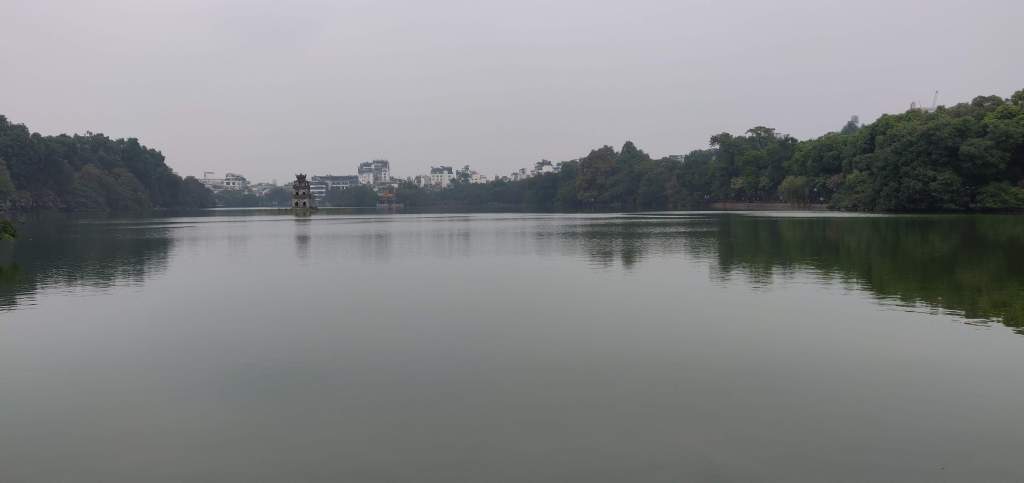
Moody photo of Hoan Kiem lake

St. Joseph’s Cathedral of Hanoi

We found this landmark strangely comforting after we had already been travelling for over a month, although it was strange to see a Catholic cathedral in Asia, definitely a highlight to consider.
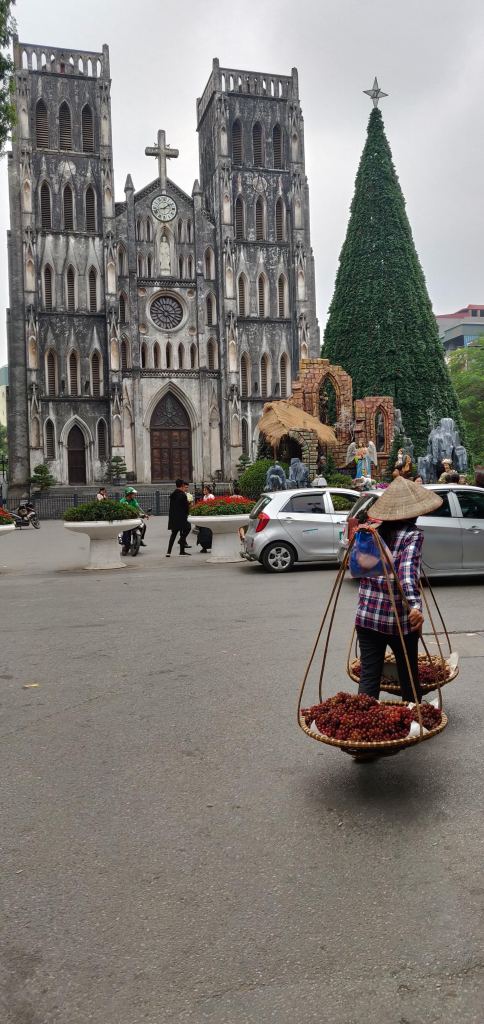
St. Joseph’s Cathedral of Hanoi at Christmas with a Nativity

Other places of interest are:

Tây Hồ Lake (Cute colonial architecture, expat community)

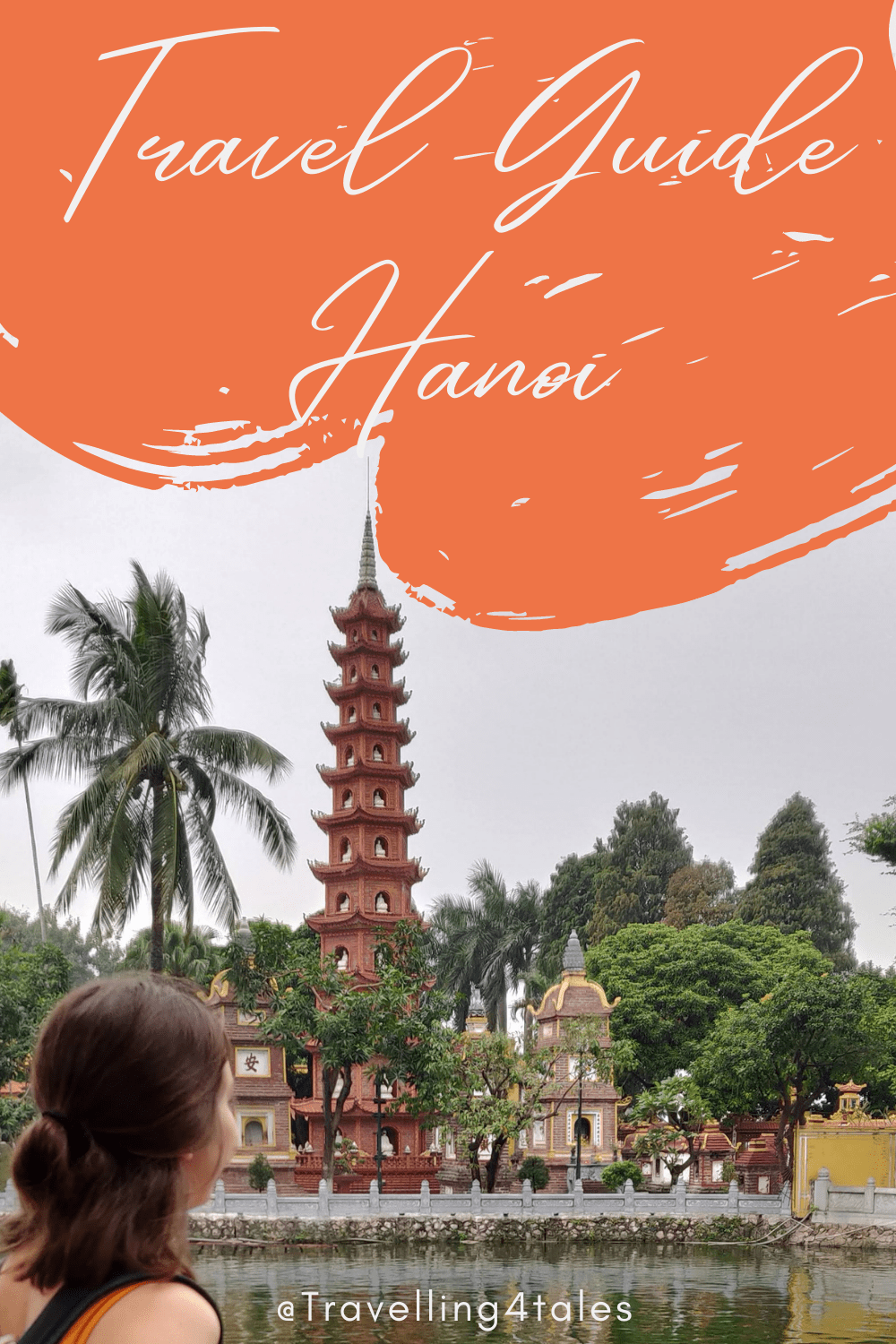
Trấn Quốc Pagoda (Place of worship, long and photogenic pagoda)
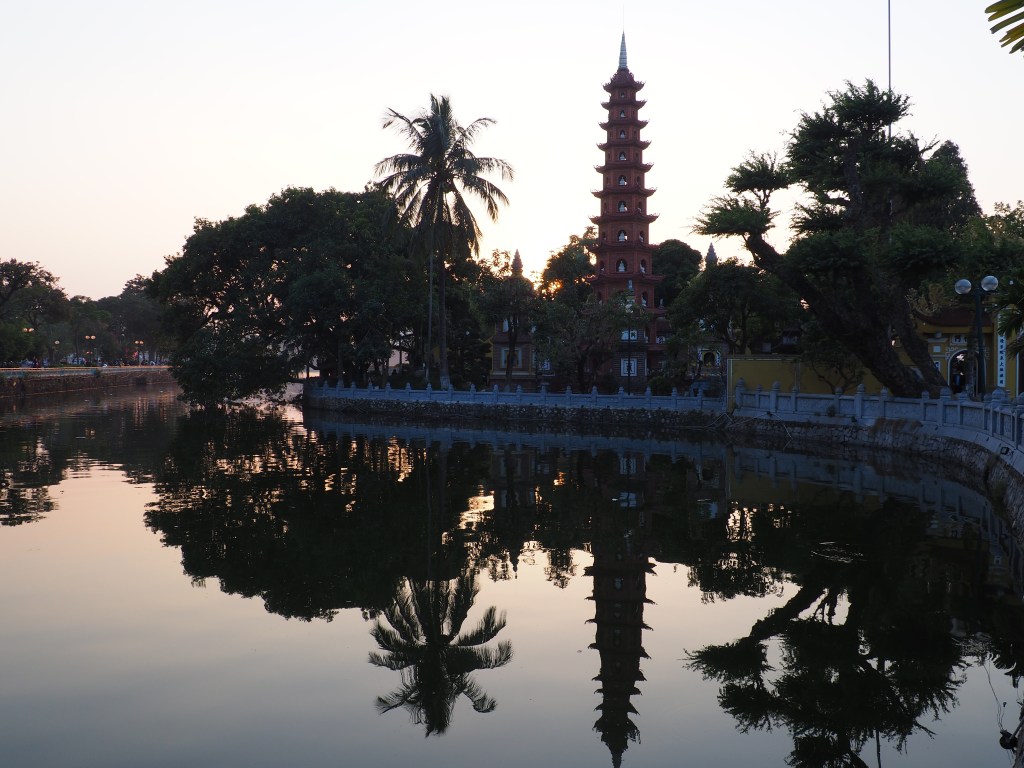
OLYMPUS DIGITAL CAMERA

Thang Long Water Puppet Theatre

This theatre is located very close to Hoan Kiem lake. Here you can experience a typical north Vietnamese traditional puppetry show where puppeteers tell tales of Vietnamese rural life whilst submerged in the water. The show is completely in Vietnamese but words are not needed to understand the concepts of the stories, in fact, the comedic connotations helped us break the language barrier completely. The show is accompanied by a beautiful orchestra with traditional instruments such as bamboo flutes and colourful lights. 
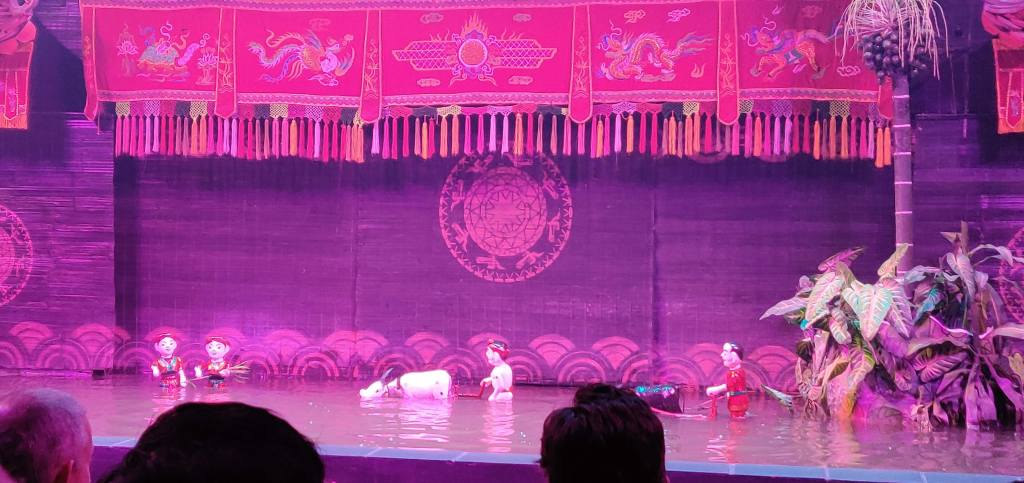
Water Puppet Show in Hanoi

Hanoi Opera House and Vietnamese Women’s Museum 

The only reason we have compiled these two places is because they are both located a short walk from Hoan Kiem.

The opera house is a majestic French colonial building worth visiting even if not joining one of their incredible musical events. Their website is also in english so a visit is definitely recommended http://hanoioperahouse.org.vn/en

The Vietnamese women museum portraits with three main exhibitions the role of Vietnamese women in the cultural development and history of Vietnam.

Go shopping!

In terms of shopping, Hanoi has something for everyone, there are chic boutiques and high-end luxury malls but also more local experiences. The latter is what we most enjoyed so here are the best markets we found in Hanoi:

Old Quarter: Not a market as such but a lot of them, there are permanent hole in the wall shops but also temporary market stalls selling the typical trinkets and clothing but also more traditional Vietnamese items, it is a good market for souvenirs but also for more generic items (Ainhoa bought a pocket knife to eat mangoes here, yes, very specific use)

Dong Xuan Market: What we loved about this market is how little it was targeted to tourists (at least when we visited in late 2019). There is a bit of everything here but we mostly noticed fabric stalls, clothing stalls down the bottom level there were a lot of fresh food stalls but also dried spices, food and coffee (here they sold the infamous weasel coffee, but we totally opposed buying this product as the welfare of the civets is not regulated at all)

Hang Da Market: Similar to Dong Xuan, this market sells a bit of everything but perhaps with more variety of stalls across all levels, there are also traditional snacks to recover the energy needed to shop. 

Long Bien Market: This market is more of a cultural experience rather than a market a passer-by would benefit from (although if you are an expat or have a kitchen you will definitely be interested). Long Bien is a fresh food wholesale market, it opens in the very early hours and it closes in the morning, however, this was our favourite spot to buy fruit and some cooked food such as Gio Cake and here is where we tried our first Bahn Mi (and the rest is history).
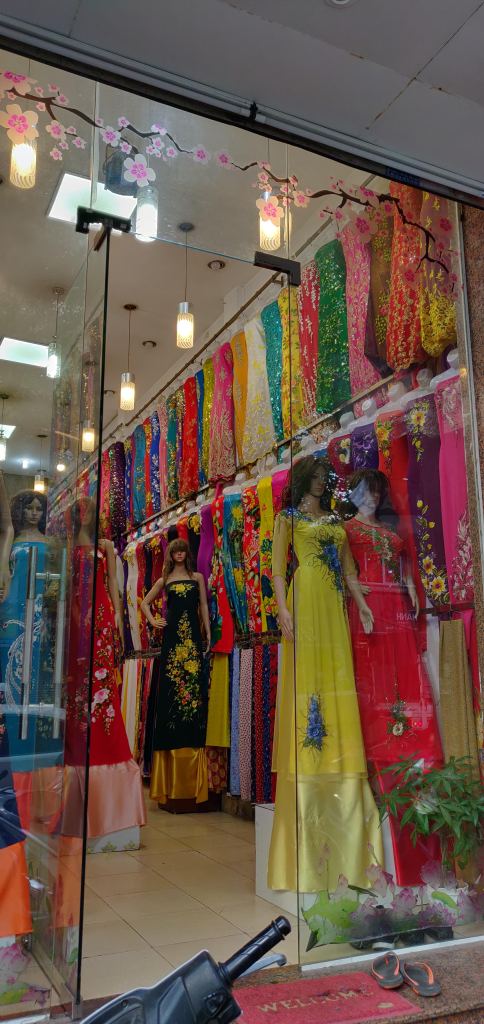
One of the most typical things you can buy is an Áo dài, the traditional Vietnamese dress. Representing the feminine beauty.

Visit the Historical Highlights of the City

The Temple of Literature

This temple, besides its name, is actually more of an ancient place of study than a temple itself, although it is tightly linked to Confucianism. In fact, the main design of the temple is based on Confucius’ birthplace.

Here you can find incredible gardens and architecture and you can also pray for good grades if you are a student (or about to become one). There are lots of quirky features in this temple such as a roof full of coins and sacred stone turtles you can rub for luck!
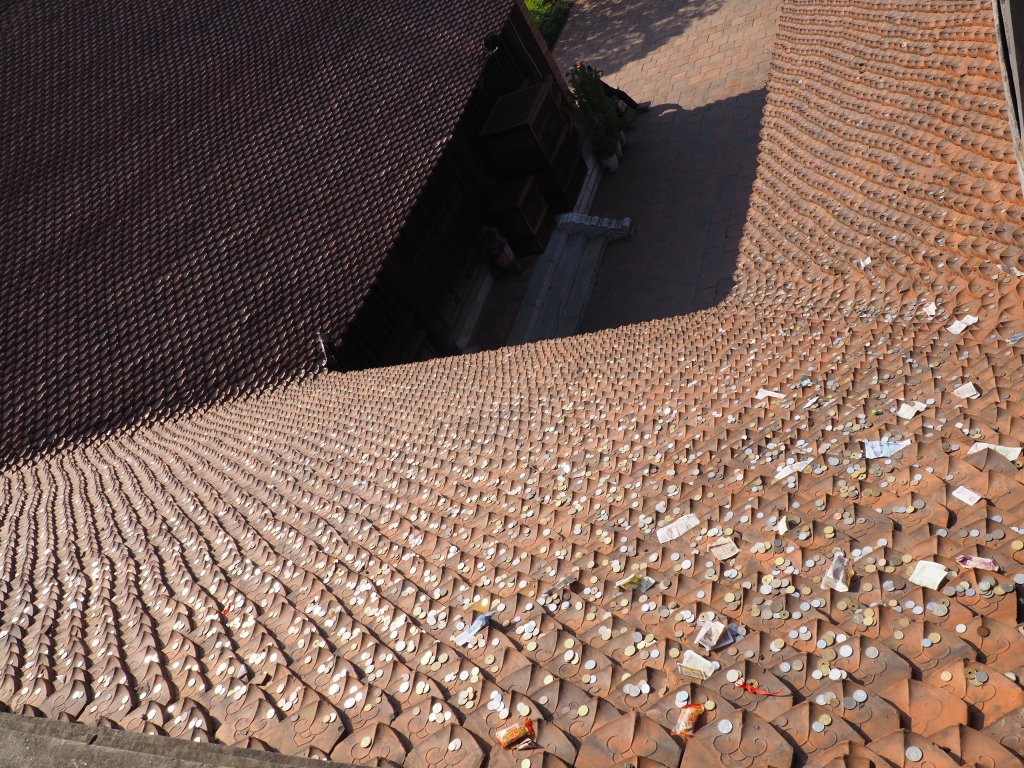
Roof full of coins at the Temple of Literature

Ho Chi Minh Mausoleum and Ba Dinh Square

The Ho Chi Minh Mausoleum is the place of rest of the revolutionary leader Ho Chi Minh. Our visit inside the mausoleum was very short and we were escorted into a room where he lies within a glass sarcophagus. Ba Dinh Square, where the mausoleum is located, is known because it’s the location where Ho Chi Minh read the Proclamation of Independence from French colonial rule in 1945.
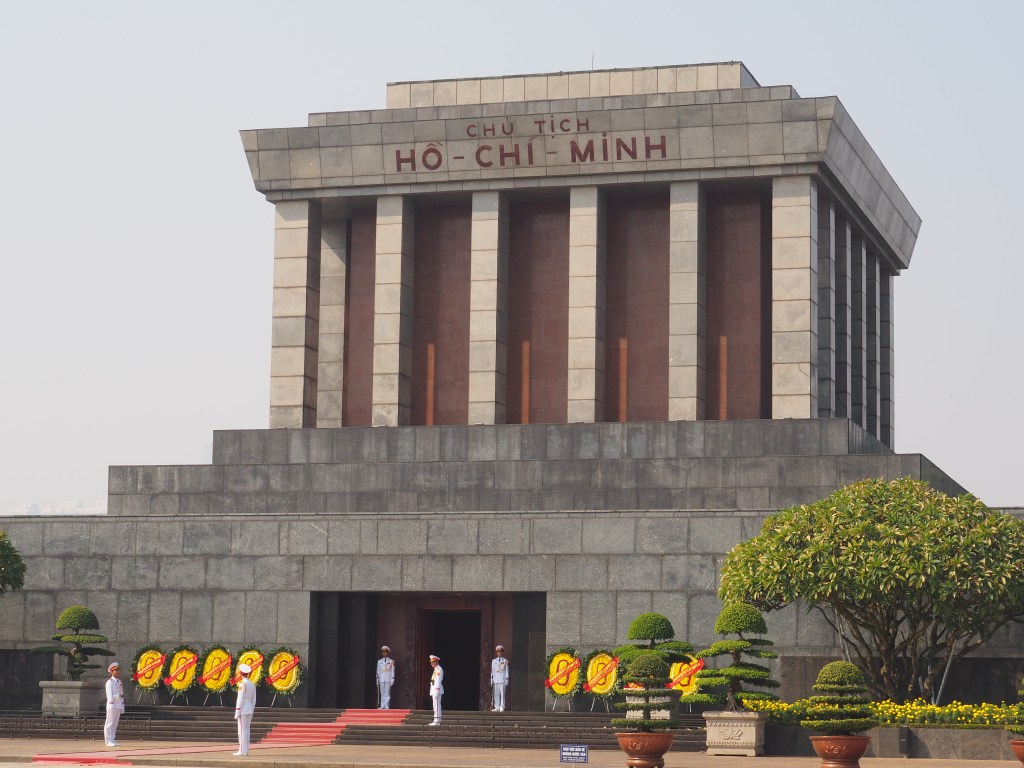
Ho Chi Minh Mausoleum, Hanoi

The Imperial Citadel of Thăng Long

This incredible citadel is a great way to get introduced to the dynastic rule of Vietnam and to admire the architecture of the 1010s.

Train street

Definitely not a historical highlight but an experience not to miss nonetheless. The train street has gained a lot of popularity due to social media. However, when we went, police officers located at each side of the street were stopping people from entering the street, we managed to get through escorted by a woman trying to sell us coffee. If you would like to experience the street’s stress free we recommend you visit Cafe A99 which oversees the train tracks at a safe distance (plus their Cà phê sữa đá or Vietnamese coffee is delicious!)

Eating in Hanoi

Did you ever think Vietnamese food is just Pho and Bahn Mi? This cuisine has so much to offer it has literally become one of our favourites. All dishes have a very fresh and herbal taste that compliments beautifully with all sorts of meats and fish.

Let’s get it out of the way first, Pho is a must when visiting Hanoi, especially since the Northern and Southern style Pho dishes are well different. We were told Northern Pho uses thicker noodles and is lighter as opposed to Southern which uses thinner noodles but it’s richer and sweeter. 

Bahn Mi is just one of these street food delicacies that offer an incredible balance of everything in the bread. It’s like the most beautifully equilibrated sandwich, fresh and meaty with delicate herbs.
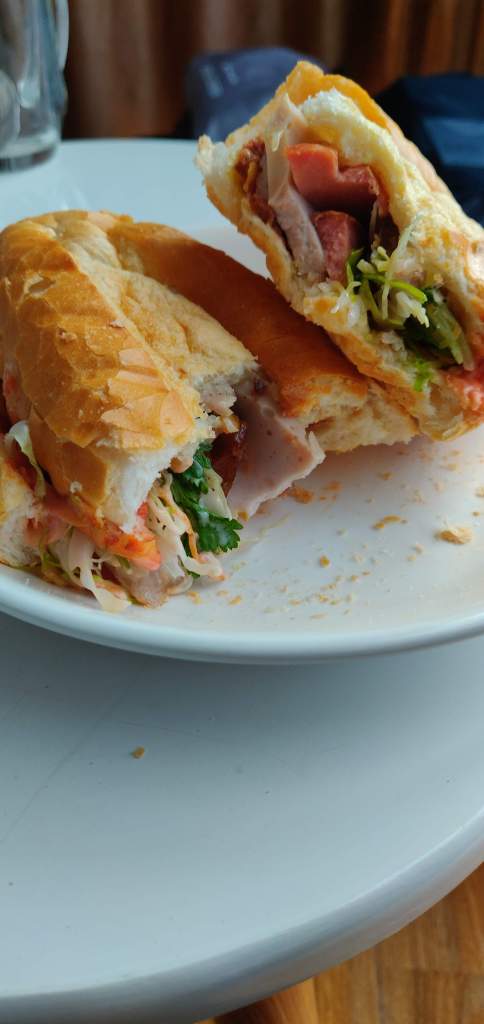
Destroyed Banh Mi, courtesy of Pete (Sorry Vietnamese friends)

Besides these two, our favourite and most recommended for Hanoi are the following:

Egg Coffee

Not really a dish but more a delicacy to try when visiting Hanoi, its birthplace. Cafe Giang who claim to be the inventors of this coffee serve it at a good price and the place is so crammed you will definitely be making some friends!
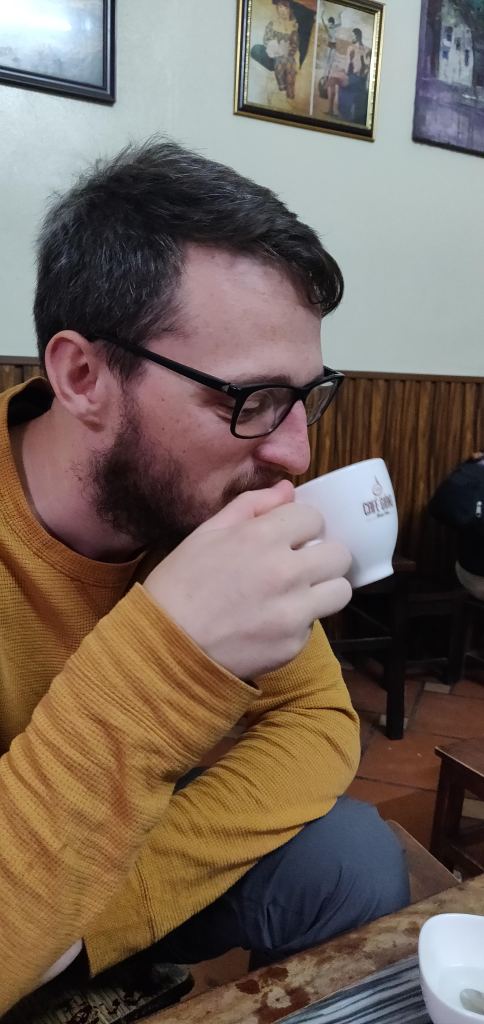
Pete enjoying Egg Coffee at Cafe Giang

Bia hơi

Also not food, but definitely a culinary experience. This fresh draught beer is brewed fresh each day and it’s very cheap. It is normally served with peanuts but in most Bia Hoi places you can find a wide variety of delicious dishes (and weird ones too). In our favourite Bia Hoi corner they were selling tortoise meat (no, we never tried it).
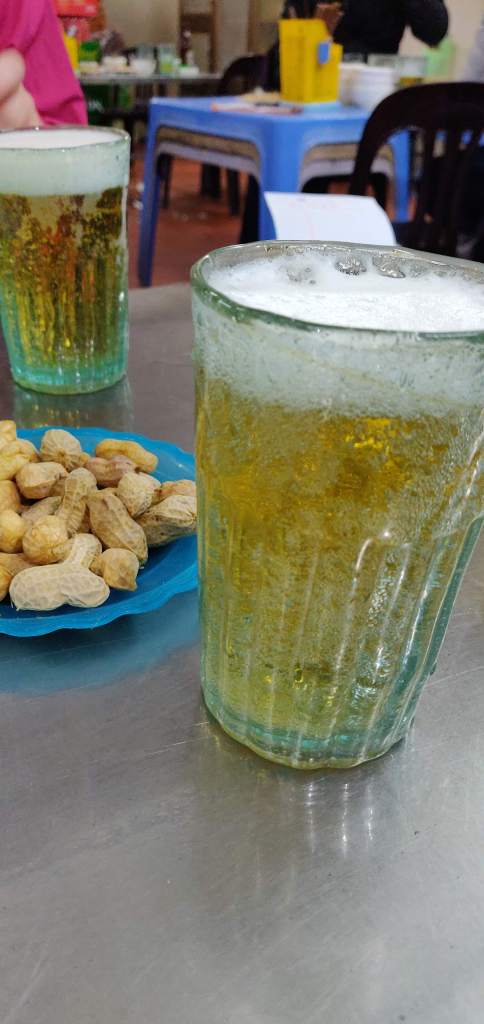
Fresh Bia Hoi in Hanoi

Chả cá Lã Vọng

Turmeric infused fresh catfish served with noodles and accompanied with ginger and other herbs. We tried it in a Bia Hoi restaurant so there are probably lots of options.

Bún riêu

A flavoursome tomato based soup with crab meat, very filling but absolutely delicious!

Bun Cha

Pete absolutely loved this one. They are very similar to Western meatballs but very sticky and sweet on the outside, you have to dunk them in the broth to release their full potential. We had them at a street food stall in the Old Quarter.

Bánh gối

Following on the street food delicacies, Bánh gối or pillow cakes are crispy fried dumplings filled with meat and veggies. We managed to find a vegetarian option of these for Ainhoa in one of the restaurants but food carts mainly sell the meat versions.

Honourable Mentions:

We have to recommend two places to eat which completely blew our mind, to the point that we would go back to Hanoi in a heartbeat to go back to those. BUT they are both vegetarian (as there are so many good non-veggie places, the veggie ones are the hardest to find).

Noodle & Roll

Cheap and amazing food, lots of vegetarian and even some vegan options, did we say cheap? We could not stop going back to this place, the balcony on the top floor offered the most magical evenings (although prepare to get bitten). We cannot recommend it enough!
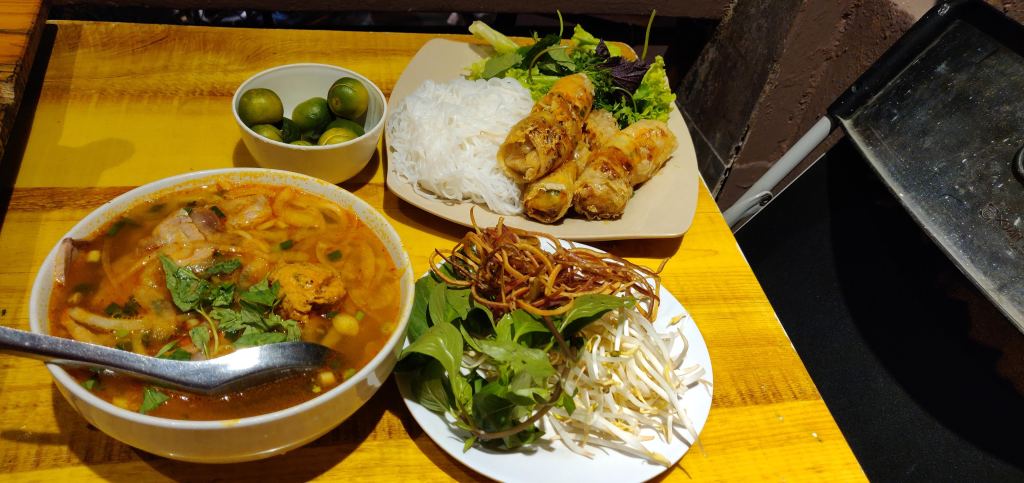
One of our meals at Noodle & Roll

Nhà hàng Chay Vị Lai

Self proclaimed as the most famous vegetarian restaurant in Hanoi, we can probably understand why. We had the most scrumptious Lẩu (hotpot) ever, filled with mushrooms, different types of tofu and veggies and all around a koi carp pond. Very zen!
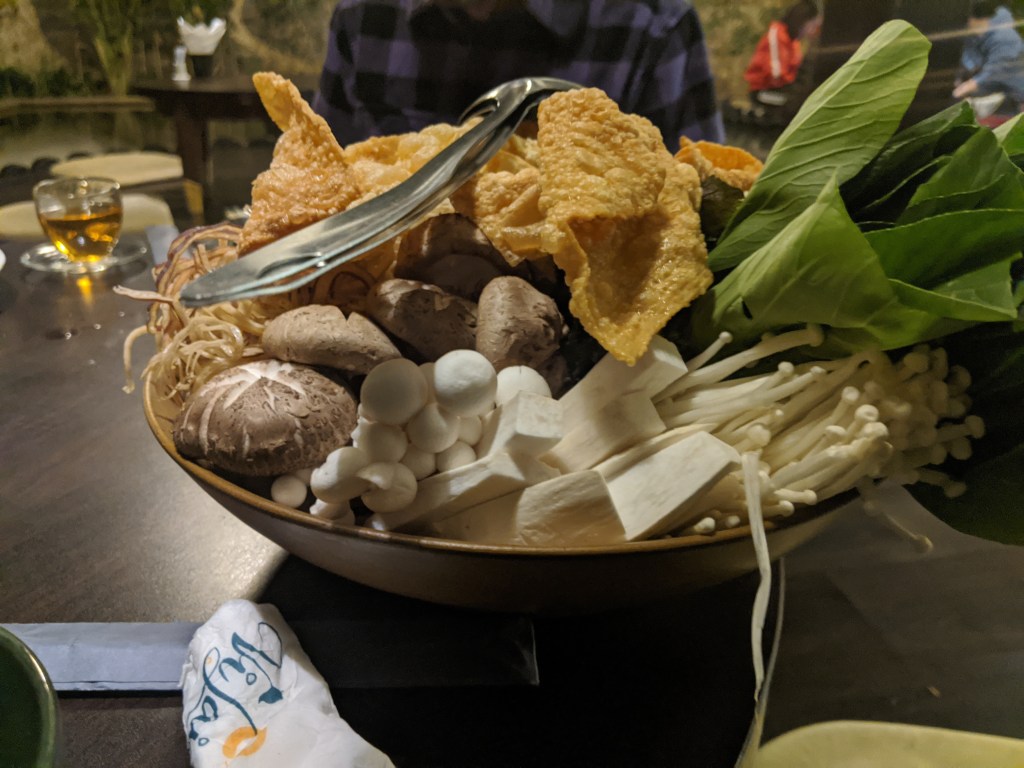
Hotpot ingredients in Vi Lai

Tips and Tricks

Crossing the Road

It might sound strange but if you have visited any European city with bad traffic (namely Naples) Hanoi is 100000 times worse. The rule when crossing the road is doing it with determination and common sense. Basically, do not fight with bigger vehicles but scooters will move around you, just don’t hesitate in the middle of the road because you will confuse them. 

Riding a Scooter

If you are going to rent a scooter, do it knowing that Vietnam has huge accident rates due to its manic traffic and poor road conditions. We sadly witnessed a tourist break her arm so it is very real. Make sure you wear a helmet and you drive carefully.

You will also need an international driving permit (in theory) although you can rent a bike using your national driving licence (we used our British/Spanish one) and our passport (never leave it as collateral). Just know that if the police catch you, you will need to pay a fine.

Overview

We really didn’t know what to expect when we arrived at Hanoi, it was our very first contact with Vietnam so it was a double surprise. We loved the city so much we actually decided to extend our stay there and we are planning to come back soon after the pandemic has relaxed and travel restrictions are lifted.

Hanoi left a lasting impression, it is busy, noisy, full of fumes and the weather can be quite moody but it is also vibrant, colourful, and very tasty. We look forward to visiting you again, Hanoi!
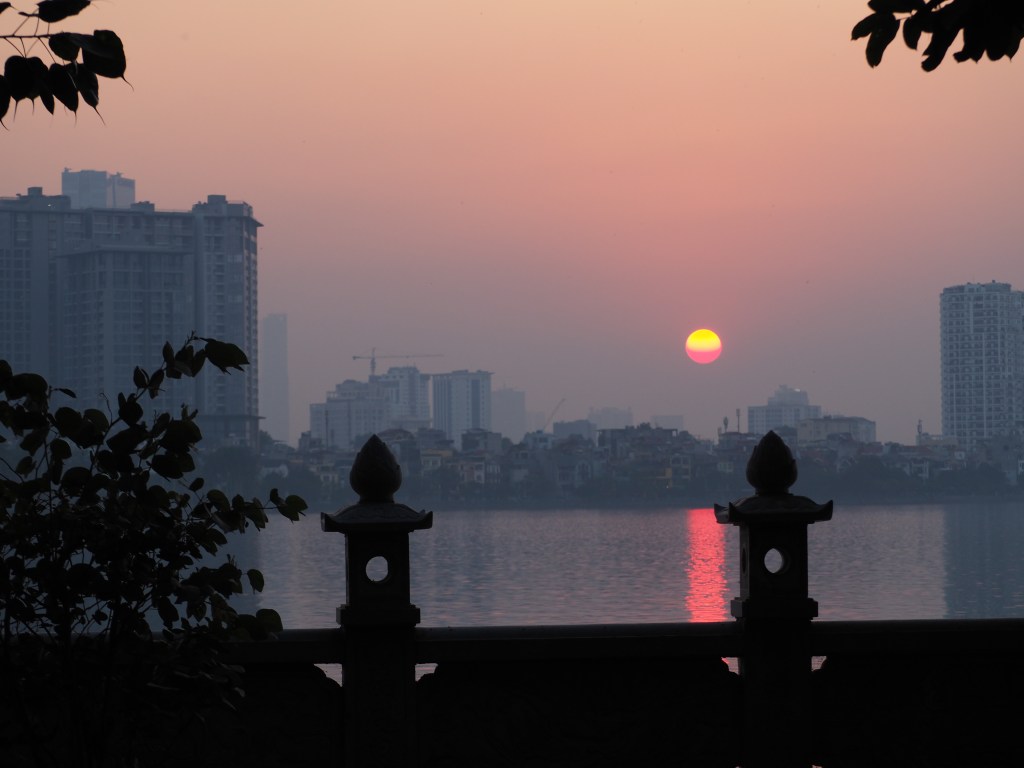
Sunset over Tay Do lake, Hanoi
Featured

Travel to Nanning: 3 Days Itinerary

Introduction

When we were first planning this trip, we just added Nanning as a stop on the way to Vietnam as it was an easy place to cross the border from. There was so little written about this city besides the best transport options to travel to Hanoi, essentially no tourism at all! But we found this city to be surprisingly welcoming and great to spend a few days in. 

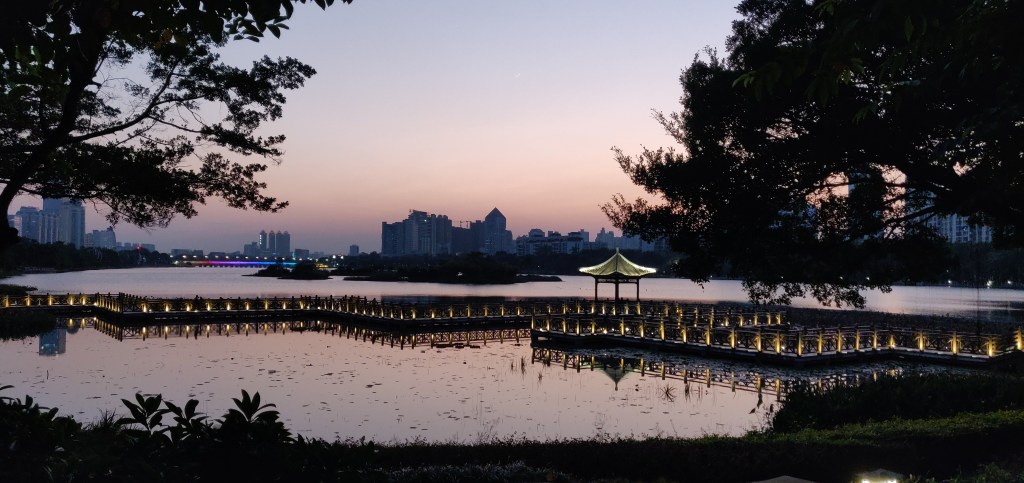
Sunset at Nanhu Park in Nanning

Best time to visit Nanning

Nanning’s weather is mild all year round, with lower temperatures in January-December and higher in July-August. However, if you want to avoid the rain it’s best to visit between March and November.

How to get in and around Nanning

Nanning Rail Transit Line (Metro)

The system may differ slightly from other metros you may be used to, in Nanning you must first pass through a metal detector and may or may not be checked by the official in charge. Then you must purchase your token in one of the ticket booths or machines. You scan the token to get in and upon exiting you will put it inside the slot. 

The metro in Nanning is extremely punctual and the trains pass regularly. Everything inside is signalled in Mandarin and English so it’s super easy to navigate. Nanning is a city in fast development and although there are only a few metro lines at the moment, more were being built at the time of our visit.

Check out Nanning’s NNRT map here.

Bus

Buses in Naning are quite reliable, you can purchase a bus map for around 5 CNY and the stops within the buses are both in Mandarin and English, also, bus drivers are super helpful and always willing to let you know when your stop is coming up if the bus is not too busy. Travelling around the city by bus is also super cheap, around 1-3 CNY (less than £0.5) depending on the route.

You can also find long-distance buses, these are the ones you might want to use for that crossing to Vietnam (Hanoi), we did not do this route by bus so we cannot comment on it, but they depart from Jiangnan bus station to go to Guilin and Yangshuo and from Langdong for Vietnam (although the Jiangnan bus can also leave you at the border). To check rough timetables we used this website.

Train

Trains are the most comfortable way to travel from Nanning, in our experience in China, trains are super clean and feel extremely safe. However, if you are the only tourist on a train you might get checked by the police like we did.

There are a few railway stations in Nanning, but Nanning Railway Station will be the one you will be lively using to travel to the usual destinations such as Hong Kong, Beijing, Guilin and Hanoi (Vietnam). All announcements are made in English and Mandarin and the staff speaks some English so they can guide you if you get lost. 

What to do in Nanning?

Enjoy nature in Nanning’s parks

One of our favourite activities, when we were in Nanning, was to relax and picnic at the parks, there are a few choices in town but these were our favourites: 

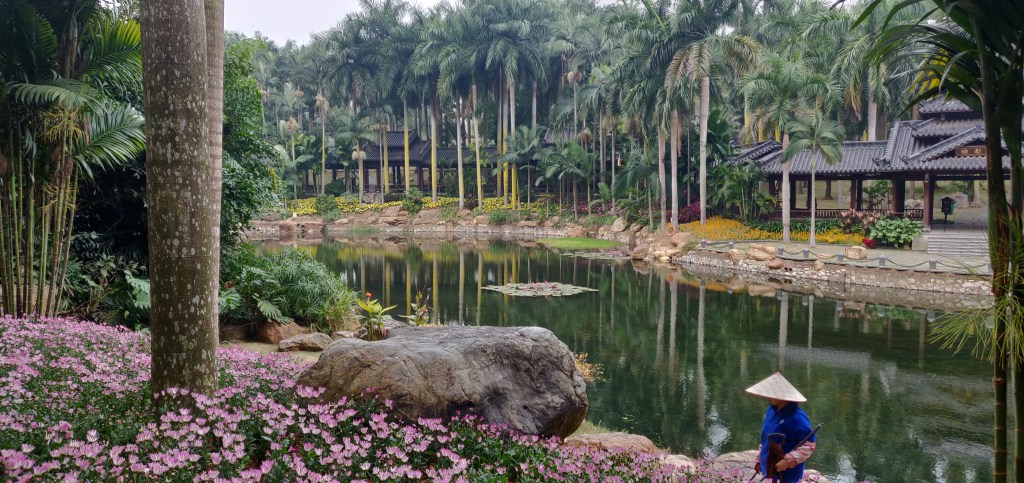
Beautiful tropical landscape in Nanning’s Qingxiu Mountain Scenic Area

People’s Park

Price: Free

Located in the centre of the city, People’s Park is a vibrant yet tranquil space. When we visited we could see families playing with their children, elderly exercising, young couples enjoying picnics, etc. The park consists of two lakes, one of them with a huge island you can walk to, populated with tropical plants and huge green spaces with grass and benches. There were some monuments and landmarks but we never got to find out what they were commemorating. We did however find out that there was a bunker underneath the park to protect the population in case of a disaster such as typhoons, storms, etc. 

How to get to People’s Park:

Walk North-East from Nanning Railway Station, following the main, huge dual carriageway road until you find it! Otherwise, from Xinminlu metro station, walk East directly next to the station. You will find a road going North, take that road and follow it straight up.

Nanning’s Botanical Garden 

If you fancy an afternoon of learning you can visit Nanning’s Botanical Garden, also called Guangxi Medicinal Botanical Garden. We found the information next to the plants extremely insightful and it’s a good place to spend a few hours whilst enjoying nature. There are also some shops around the park.

Price: Free

How to get to Nanning’s Botanical Garden:

Apparently it is very easy to get there by bus and there are lots of combinations every 20 min but we just walked. We did get lost, but isn’t that part of the fun? For information on bus lines visit here.

Qingxiu Mountain Scenic Area

Price: 20 RMB per person (Around £2.3)

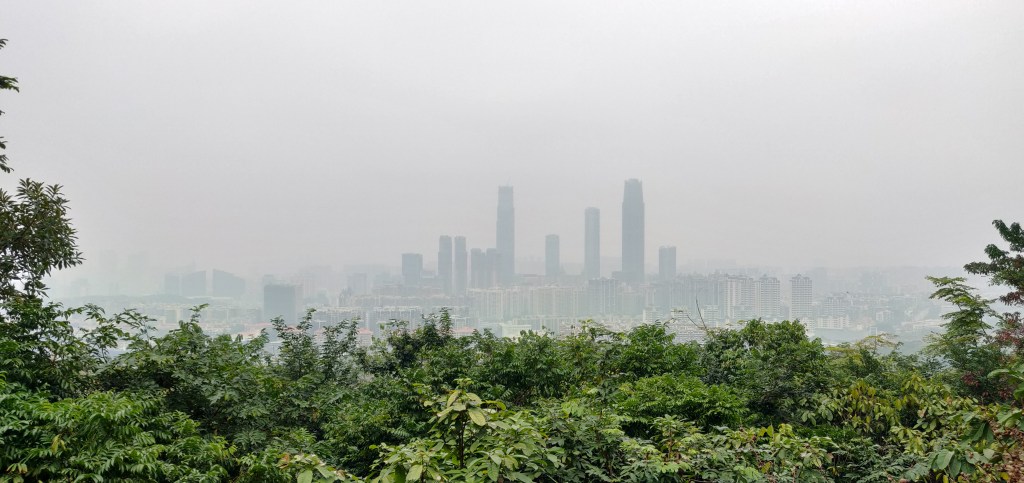
Views of foggy Nanning from Qingxiu Mountain

This park will take you a couple of days if you have them to visit it all, we decided to visit Qingxiushan (Qingxiu mountain) in one day and by walk which means we missed a lot. There is an entrance fee of 20 CNY per person and it is so worth it!, the place is huge (and literally, we thought it was big but it was even bigger than we expected!)

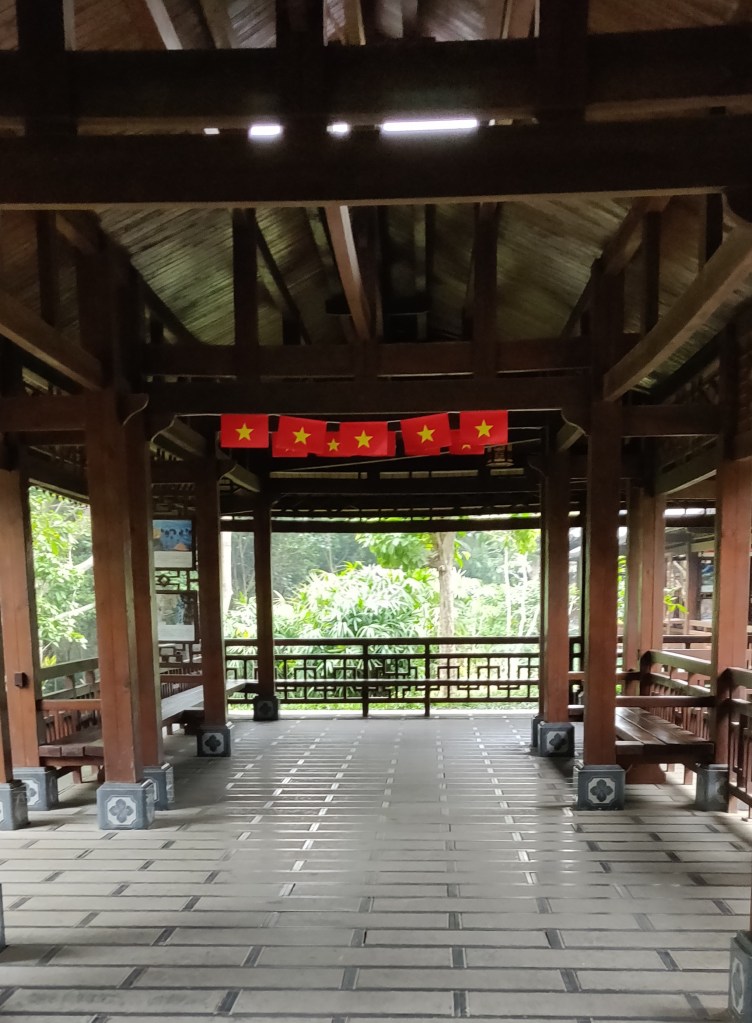
During our visit, we started walking towards the friendship corridor, which is basically a corridor featuring all the ASEAN (Association of Southeast Asian Nations) flags and some infographics with photos and traditions of every one of them. We then followed the maps around the park to find the most interesting reachable spots by walk, you can actually hire a bike or even get on a shuttle. We managed to visit the Guangxi rare tree exhibit, the peach blossom area, Longxiang pagoda, and a Buddhist temple where Ainhoa bought a blessed bracelet she still wears over one year later. We absolutely LOVED Qingxiu Mountain! Such a great day out in nature but also exploring interesting zones and plants.

Chinese section of the Friendship Corridor in Qingxiu Mountain Scenic Area

How to get to Qingxiu Mountain Scenic Area:

From the centre, get to the metro’s purple line and get out at Mt Qingxiu. We got on at Dongge Road so it was only a few stops.

Nanhu Park

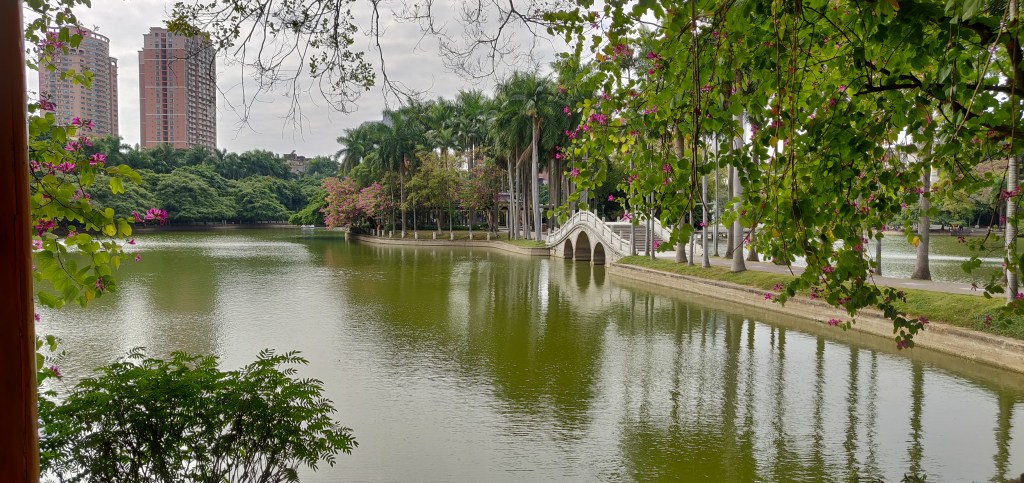
One of Nanhu Park’s bridges

This park mainly consists of a big lake surrounded by a path and greenery, there is also a very pretty bridge that lights up at night so it is worth staying around for sunset. There are also lots of water lilies and some traditional features so it is actually a very pleasant green spot to walk around.

How to get to Nanhu Park: It is pretty much in the centre, but there is a metro stop right next to the park “Nanhu”.

Other spots of interest

Jinhu Square

Five Elephant Fountain statue in Jinhu Square

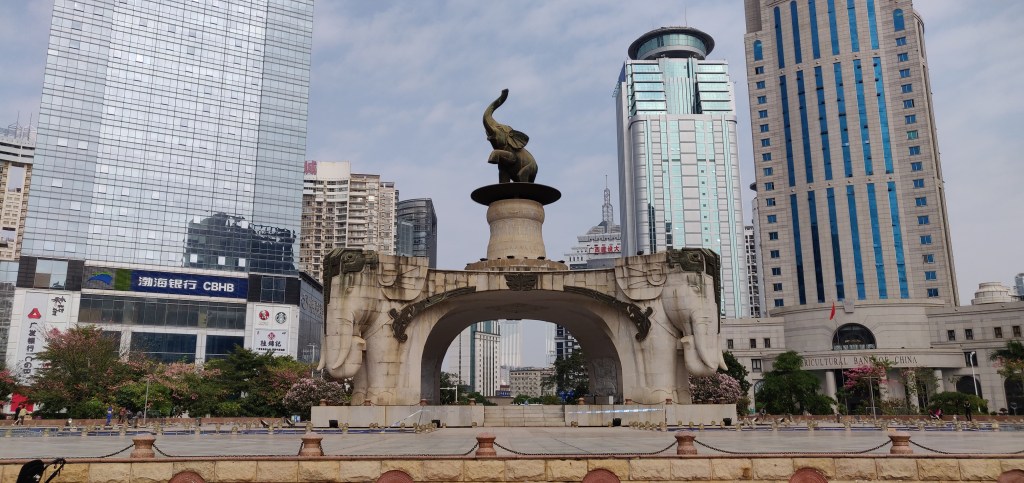
Jinhu Square, the financial district of Nanning mainly comprises lots of banks and tall buildings. There was also an elephant statue called “Five Elephant Fountain” of which we don’t really know the meaning of, but it was quite an impressive place to visit and there are lovely cafés around the area, we particulate enjoyed “The Light Café” somewhere between Jinhu and Nanhu, the atmosphere was very chill and it felt super welcoming.  

Museum of Guangxi Zhuang Autonomous Region

We didn’t actually visit this museum, but we did regret it as there is meant to be a lot of information about the different ethnic groups in the region as well as the history of Guangxi, it is located near the Xinmin Lu metro stop.

Guangxi Museum of Science and Technology

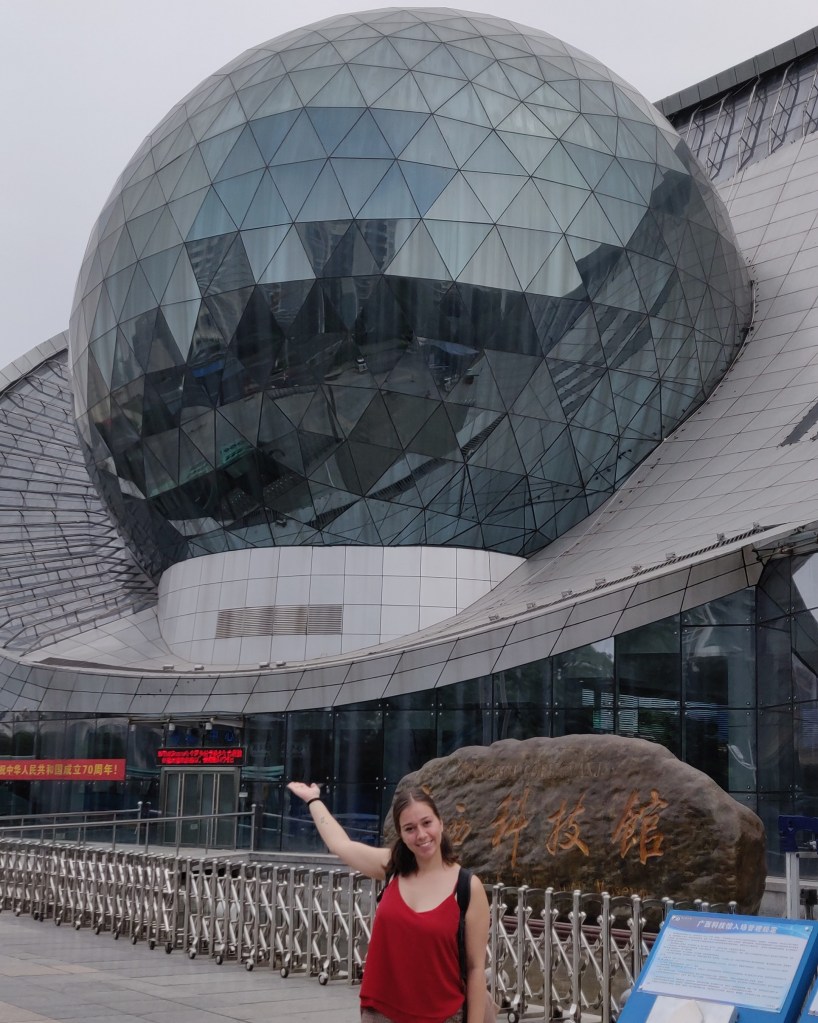
We did visit this one, we got in for free after they checked our passports but, besides a few cool experiments, we didn’t really enjoy it that much. It is, however, a cool day out if you are travelling with children. In fact, we met a couple from the USA who was visiting family and took the children there for some science entertainment. This museum is also located near the Xinmin Lu metro stop.

Ainhoa excited to visit the Guangxi Museum of Science and Technology

Zhongshan Snack Street

Although this spot should probably be in the food section, it is definitely a must-see. It’s basically a food market where you can try the most unusual things (so much so, you might not even know what it is you are eating). We tried some Chinese churro-looking things and they were really delicious.

Shopping

We thought shopping deserved its own section for Nanning, there are lots of different shopping areas, we highlight Chaoyang Square. There are lots of malls and shopping streets, some of them very traditional and right next to those, super modern ones. We felt it was quite an interesting experience and we really enjoyed browsing around. Another highlight that might seem controversial was visiting Walmart in Nanning. Such a paradox, one of the icons of American capitalism in a communist country. However, although we did find some import products (interestingly, lots of Spanish imports), it mainly sold national produce.

Get out of Nanning (Best day trips)

Detian Waterfall

Detian waterfall, also called, Ban Gioc waterfall in Vietnam is the largest transnational waterfall in Asia. It is comprised of multiple different waterfalls you can actually walk to, from the Chinese side you can clearly see Detian and Ban Gioc. There are multiple options to do this day trip, we got our inspiration from this website.

Huashan Scenic Area

The main appeal of visiting Huashan is actually to see the rock paintings on the mountain. These murals were declared UNESCO World Heritage Site in 2016. One of the most impressive things about these paintings is that they are located on a very steep cliff over the Ming River which seems like quite an unusual location. The paintings are thought to originate from the Luoyue Tribe, which are ancestors of the Zhuang around 2,000 years ago. There is an entrance fee of 80 CNY per person. In order to get there, you need to get a bus from Nanning Langdong Bus Station to Ningming or you can get a train from Nanning train station to Ningming. Once in Ningming, you will need to get a boat to the Huashan Scenic Area. We found all our information here.

Overview

If we could recommend Nanning, we wouldn’t necessarily recommend it as a must-see city, we have always described Nanning as a city we would live in, it has plenty of green spaces, great food, convenient links, but it’s not a city that would grant a visit alone. Saying this, there are lots of incredible spots you can visit from Nanning such as the Detian waterfalls or Huashan. If you are planning to cross to Vietnam by land or you are stopping by for any other reasons, you should definitely give Nanning a visit!

Baiona, Rias Baixas’ Medieval Pearl

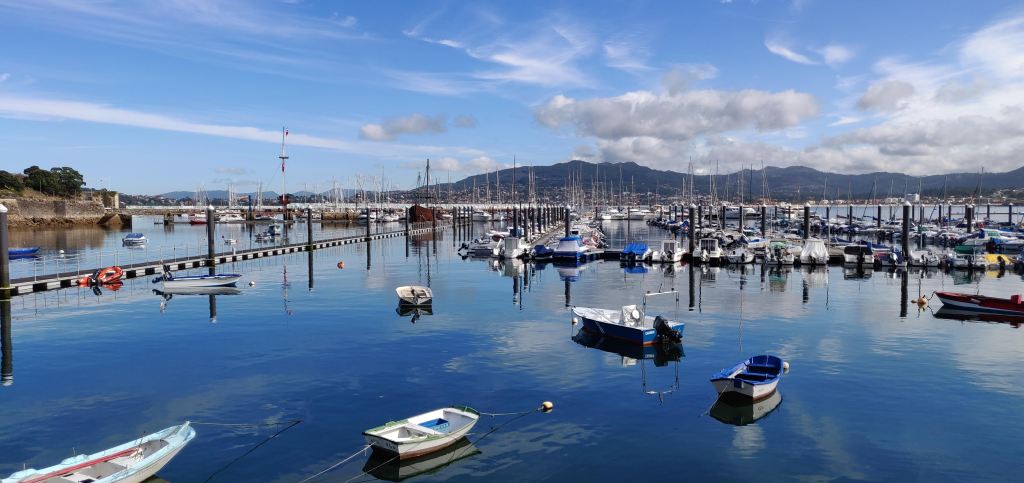
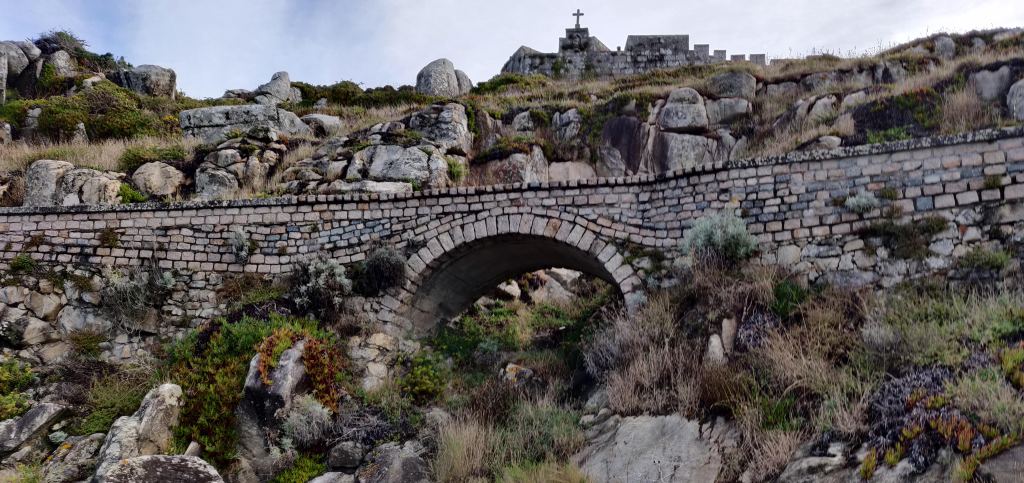
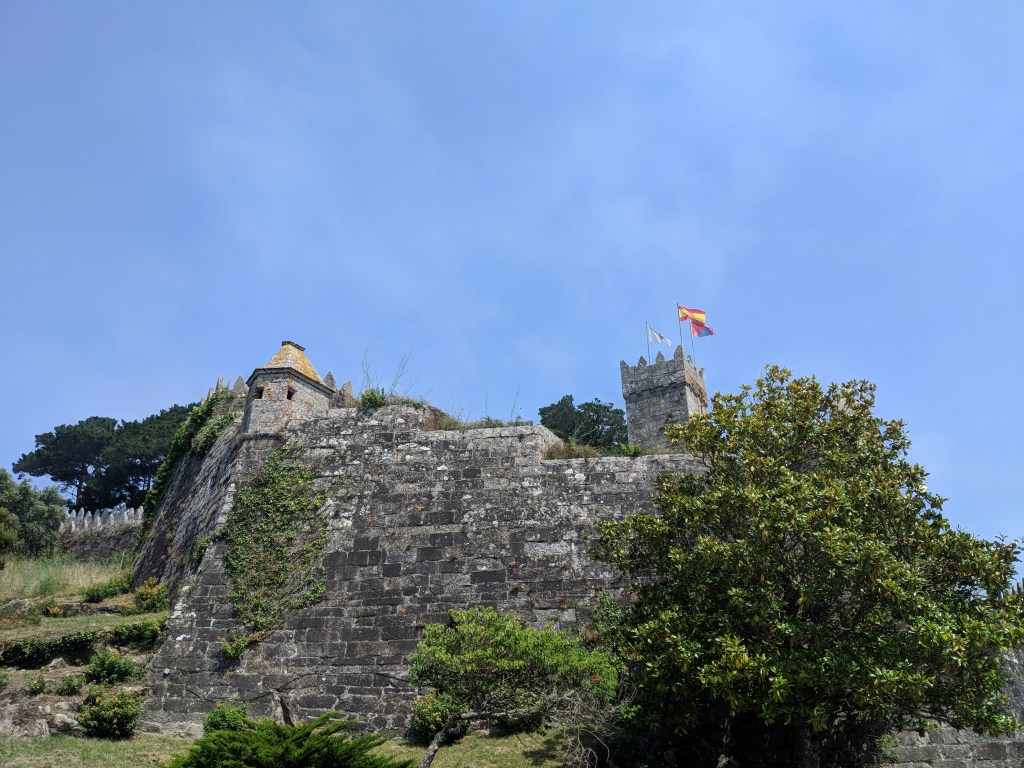
If there’s a town we absolutely love that would be Baiona. What to expect? A small and traditional fishing village yet catered for tourism better than its neighbouring towns, with fantastic beaches and even its own castle!

When in Baiona, you might see a lot of historical names such as Pinzon, Carabela, etc. This is because it is well known that La Pinta, one of the ships that arrived from Christopher Columbus first transatlantic voyage moored here in 1492. This is celebrated yearly in March with a full-on medieval festivity that lasts the whole weekend (“Festa da Arribada”)

Why do we love Baiona?

It is a place where you can relax on the beach, grab an ice cream, walk up to a viewpoint in the mountain, get tapas and dance all night, all in one place! And all of it hugged by some of the most beautiful seaside landscapes

What to do in Baiona?

1. Paseo do Monte Boi

Walk around Baiona’s “castle” in a beautiful coastal path with changing scenery, from rugged rocks beaten by the sea to amazing beaches, it is an easy walk that will clear your mind and bring you so much peace

2. Beaches

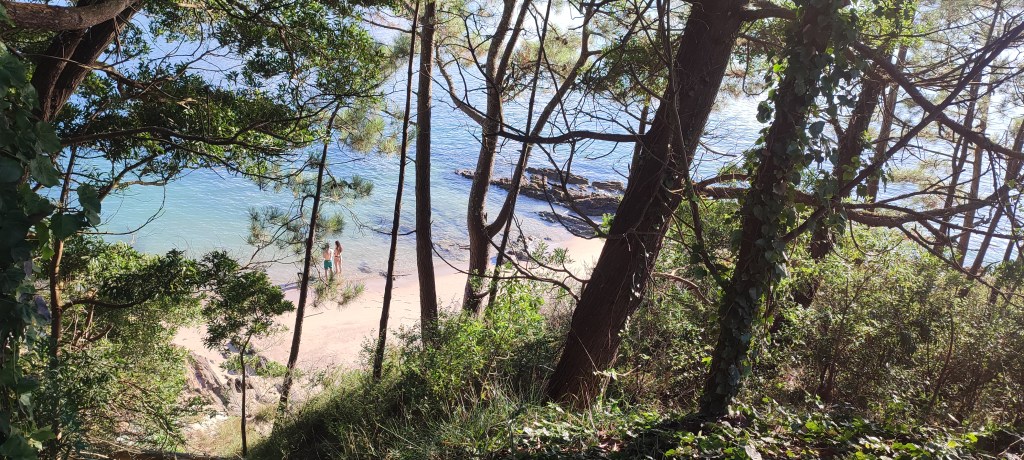
There are a few choices of beaches in Baiona, inside the Paseo do Monte Boi, you can find Praia da Barbeira (picture above), just outside the castle, Praia da Ribeira is a very family oriented beach with plenty of sun and calm waters.

A bit further ashore (around 15-20 min walk along the seafront) you have Praia Santa Marta and Praia Ladeira, larger beaches with traditional chiringuitos (bars on the beach)

If you walk all the way from end to end of Praia Ladeira you will reach Camping Baiona Playa which has a waterslide and views to Estuary of Foz, a lagoon formed by a river outlet.

3. Explore the Medieval Town Center

The streets in Baiona are very unique, explore them and get lost, buy some local handicrafts or souvenirs and explore some of the beautiful churches such as Colexiata de Santa María or Praza do Concello, the town hall square

4. Virxe da Rocha

Virxe da Rocha is a viewpoint inside of a huge 15m granite Virgin Mary statue, you will be seeing the whole of the coast from a little boat in her hand!

The area surrounding the Virgin is absolutely stunning too, with a little picnic area in the forest surrounding the statue

5. Monte Silleiro and Talaso Atlántico Spa

If you like hiking, Monte Silleiro is a great choice, the views over the rugged coastline are incredible! Take a bus from Baiona’s Bus station to Baredo (Curvas) where you will find the hike path

Around this area you can also find Cabo Silleiro, for that stop at Silleiro bus stop and walk back to the lighthouse

If you stop in Silleiro bus stop, you can also go to Talaso Atlántico for the day, one of the best spas around the area. You can enter their “Palace of Water” for 1h for only 17 euros (Mon-Fri, 9 euros for pensioners), Ainhoa loves this one!

6. Visit La Pinta replica

You can get into the replica of the ship that arrived from Christopher Columbus’ first transatlantic voyage in 1492. It also offers lovely views of the port

7. Dance! (or enjoy the nightlife)

Baiona’s weekends are great for dancing and enjoying the nightlife, we really love D’Sastre a tailor’s themed bar with cocktails and music, Bibendum has fantastic cocktails and gets exciting late at night. Along the same street you can find lots of bars, just follow the vibe and get partying!

Villa Rosa is the most incredible nightclub, it’s based in a house with 3 floors, serving drinks and a full-on dance floor but it is not always open so

8. Take a trip to one of the world’s most beautiful beaches at Cies Islands

If you want to visit the stunning Cies Islands, you can take a boat from Baiona using Naviera Mar de Ons. The trip from Baiona is 40 mins.

However, make sure to register with the National Park before trying to book your tickets as you will need an authorisation code, this is to keep them as beautiful as they are and prevent mass tourism.

Here is the registration website

Where to stay in Baiona?

Baiona is such a small town, anywhere would be within walking distance. If budget is not a problem we recommend staying at Parador de Baiona or Talaso Atlántico or Hotel Pazo de Mendoza. For more affordable options, browse some of the town hotels such as Hotel Bahía Baiona, Hotel Anunciada or Hotel Pinzón

Where to eat in Baiona?

Traditional Galician meal

Taberna Mendoza, not the cheapest but outstanding food! Underneath the hotel Pazo de Mendoza

Restaurante Casa Rita is also on the higher end, but the food is also good quality, the cook based on fresh catch of the day

For more affordable options, Restaurante El Túnel, Restaurante Naveira

Tapas

We really love O Refuxio D’Anton, but the beautiful thing about tapas is to get lost in the tapas streets and try a bit from each!

Wildcard options!

El Corralito, a restaurant with simple yet delicious options, specialising in chicken and eggs

La Crep Restaurante, there are two La Crep, a smaller one by the seafront that sells snacks and a restaurant in the cobbled streets that sells savoury creps, but enough for a meal! We love it!

La Pepita Burger Bar – Baiona, this chain has been increasing in popularity in the north of Spain and we can totally understand why! Amazing burgers with good quality ingredients

Dessert!

La Crep, the sweet and savory branch by the seafront will have a wide offer of sweet coffees and desserts such as waffles, crepes and ice-cream

Emilín Churrería, you should not leave Baiona without trying churros in Emilín, a churros café that has been in that same location for years!

Xeados Gamela, just a couple of doors down has amazing ice cream and freshly made iced lollies, it has been there even before Ainhoa was little!

Bico de Xeado is a relatively new chain offering delicious ice-creams, “made in Galicia”

Disfruttalo – Gelatateria artesanal for typical italian gelatto

Getting out and around

Buses leave regularly from Baiona’s bus station (Rúa Carabela a Pinta, 17, 36300 Baiona, Pontevedra, Spain) and at the Port (near the restaurant Mendoza) Lugove is the company that runs these services so you can check their website for route info . The regular service to Vigo costs 2.3 euros each way. For info regarding things to do and fares, visit the Tourism Information Office at : C/ Arquitecto Jesús Valverde, s/nº, 36300 Baiona, Pontevedra, Spain

Experiencing Sweden’s Countryside in a Traditional Mansion

This year I had the chance to do a course in Sweden, the topic was epidemiology so I absolutely loved the thought of getting some new knowledge but also, I jumped straight on the opportunity to visit a country I had never been to before.

We normally travel as a couple so doing a solo trip once more was quite exciting! So my first day I landed in Stockholm late at night, I found my accommodation and just slept through until I had to take my train the next morning. Destination Ekenäs.

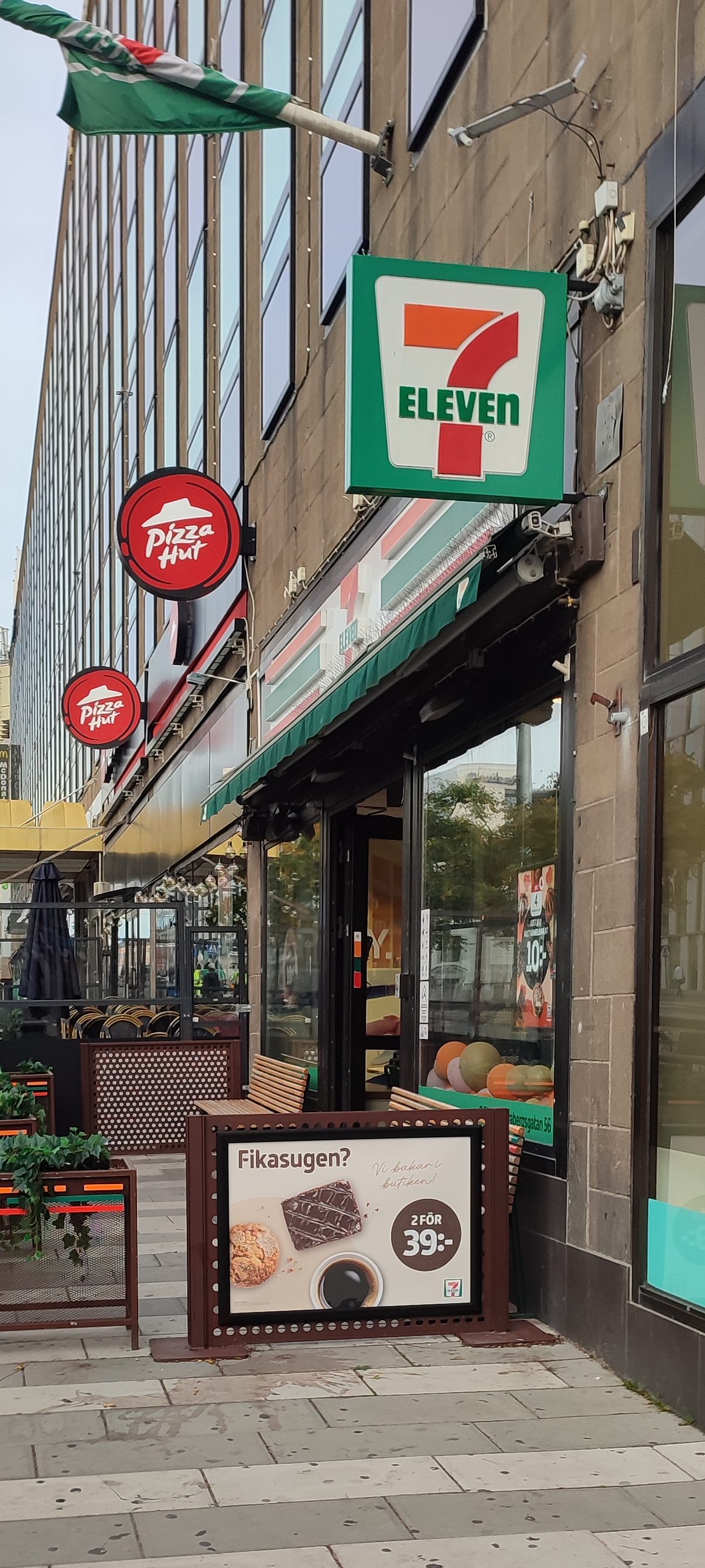
7-Eleven in Stockholm

That morning, and after travelling to South East Asia I was quite excited to see a 7-Eleven in Stockholm!

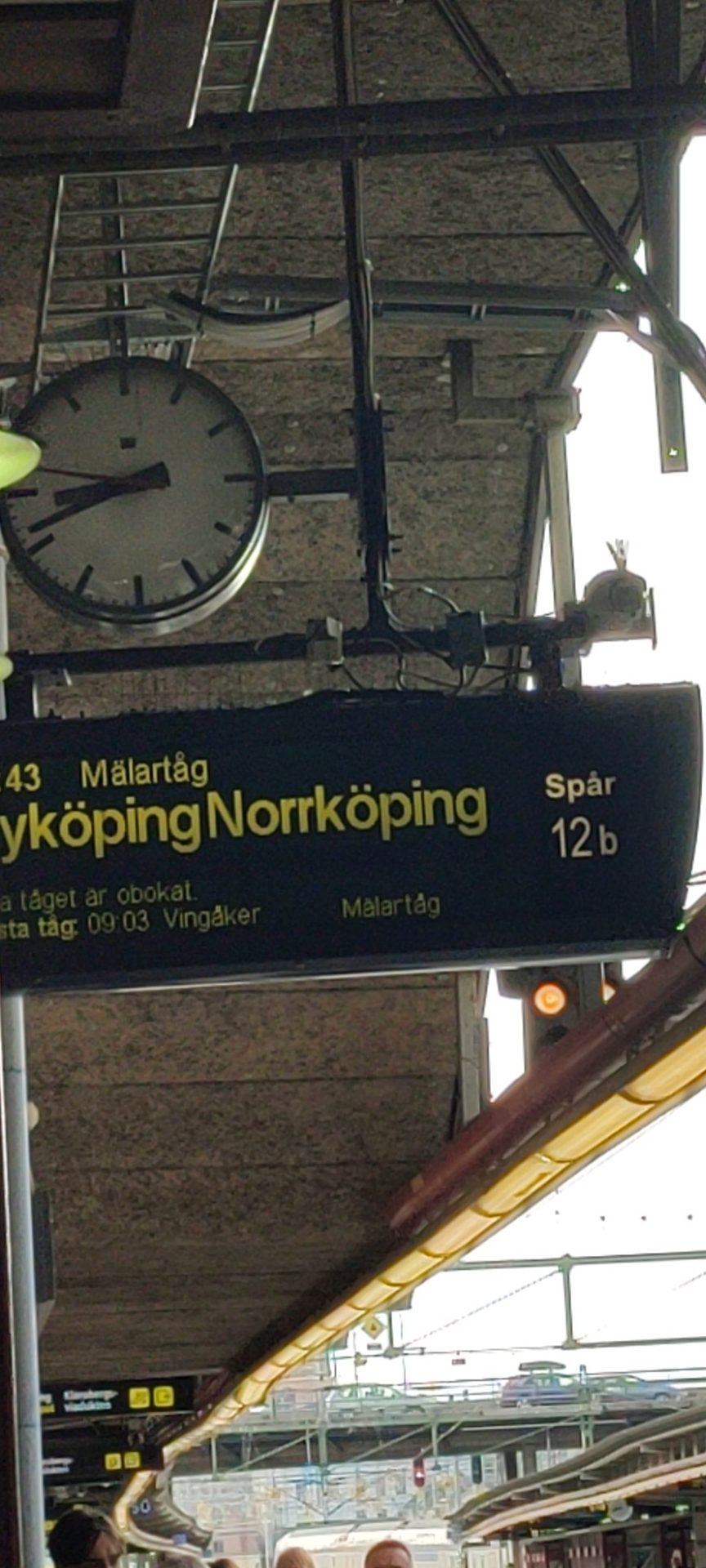
My itinerary was long-ish, but looking at the length of Sweden I was glad it was within reach of Stockholm. The plan was to travel from Stockholm Central to Nyköping and then get a bus from Nyköping to Ekenäs, where the accommodation was within walking distance of the bus stop.

Southern Europeans notoriously see Northern Europeans as the next level of organised transport countries, well, this stereotype quickly faded when my train was delayed nearly 1h.

Stockholm central station

Once on the train I got to meet one of the other students attending the course, so it was good to not have to figure the rest of the trip out alone.

Once we arrived at Nyköping, we promptly jumped on the bus opposite the station and drove through the countryside straight to a makeshift stop in the middle of a dual carriageway, where we met another student. So three of us now to figure out the last leg, the walk to Ekenäs Herrgard.

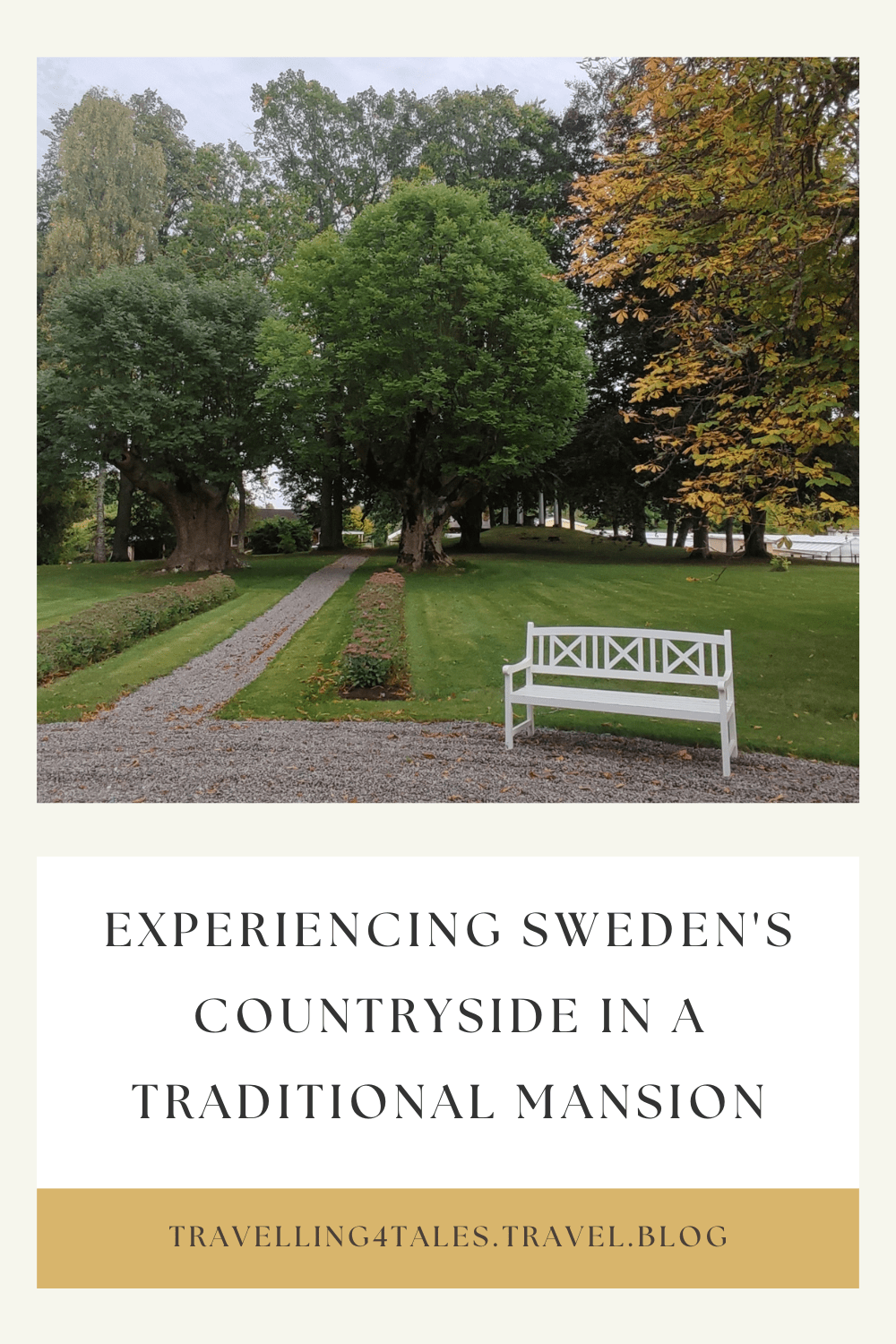
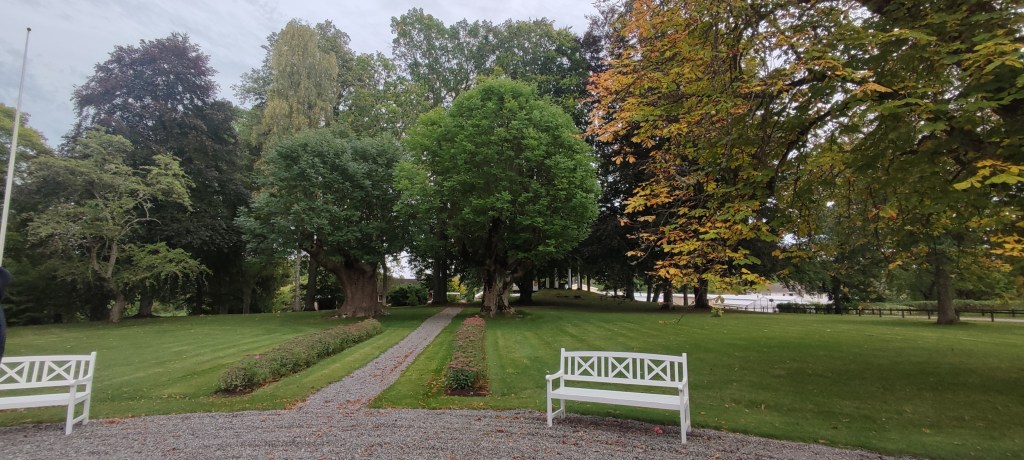
The views from Ekenäs Herrgard

A quick walk from the road, we arrived at the mansion and it was stunning. The gardens were beautifully manicured and the setting was completely isolated in the countryside.

After getting to meet each other, we met our hosts in the mansion, a middle-aged woman and a young man who will cook for us and provide us with many Fika (Swedish coffee and cake breaks) during our week-long course.

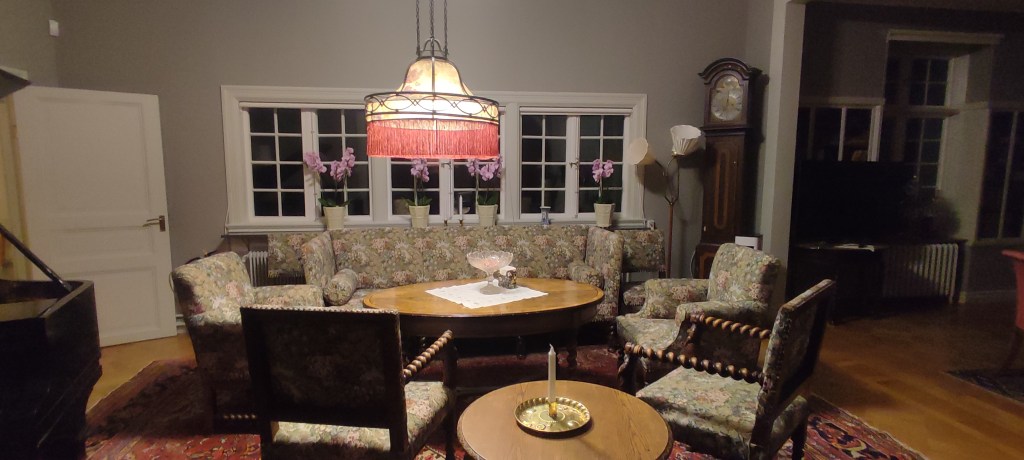
The inside of the mansion looked like a museum!

Throughout the week, we were fed home-cooked Swedish food varying from traditional meatballs, to herb-crusted salmon, pasta and so many delicious biscuits and coffee. We felt like a big family together living in that mansion (and sharing rooms). In fact, our room was not isolated so we had to walk through another bedroom before reaching ours (oops!)

Every day, we would do an afternoon walk around the countryside and some would swim in the nearby lakes (not me, as I am a chicken).

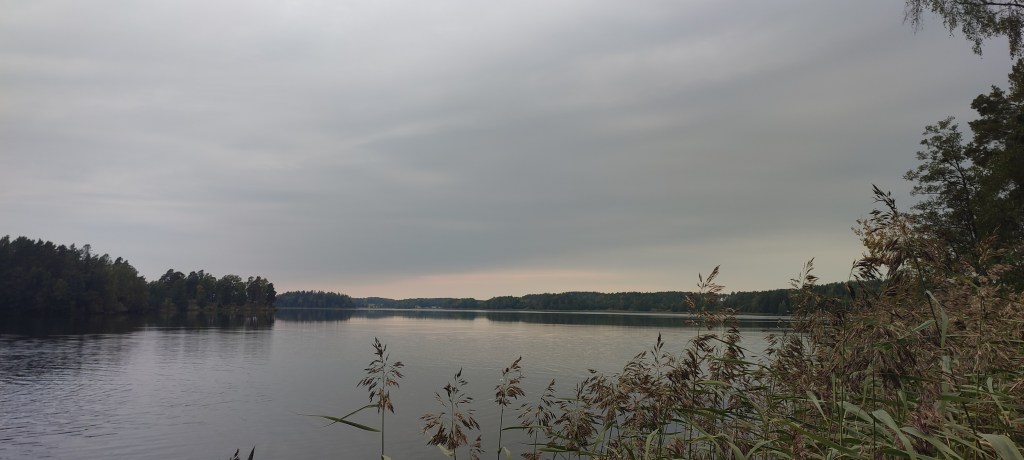
Gorgeous lakeside views from the countryside in Ekenas

The countryside walks could have been the most peaceful part of the week, however, mosquitoes in Sweden are VICIOUS! I had never seen so many mosquitoes in any given location to the point that walking through grass would materialise dozens of them at once.

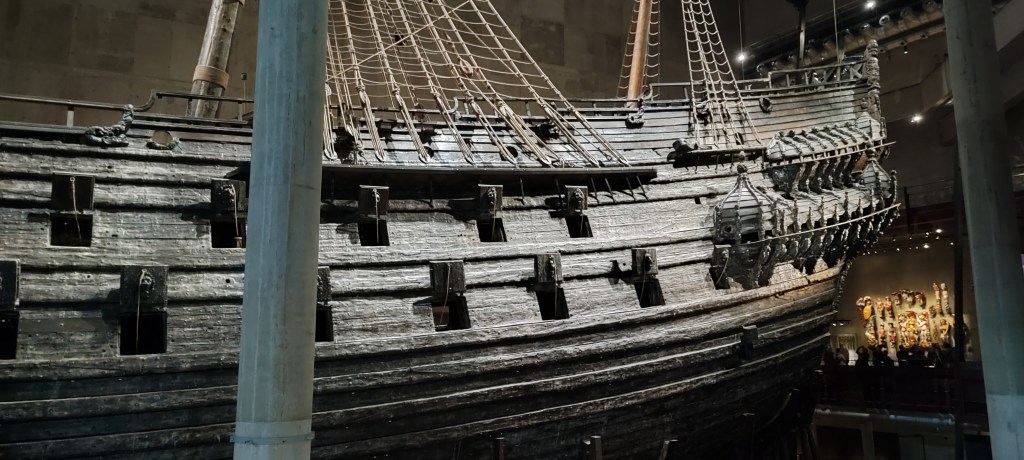
The week finished with me joining a fellow student on her trip back to Stockholm where we visited Vasa Museum, a museum displaying a 1628 ship that sank in its maiden voyage as it was built to narrow to be able to navigate.

Vasa musem Stocholm

Day 3: Hong Kong

The Peak

After trying to get a bus to the Tai Po area to visit the Ten Thousand Buddhas Monastery but failing because all Nathan Road was shut due to the protests, we change our plan and decide to get the MTR to Central and then a bus to The Peak (tram seemed to pricey and we are incredibly stingy).

However, it turns out, after 40 minutes waiting at the station, buses are not running either to go to The Peak so we decide to finally get the tram. Normally extremely busy with tourists, we find it completely empty (only a couple of families). We make our way up and go all the way up to the mall to a “secret” viewpoint now everyone knows about thanks to social media (I guess that’s why we know it too) right behind the pizza restaurant. We then try to find food in that area. After not finding anything local open, we end up with two overpriced cheese toasties (sigh…).

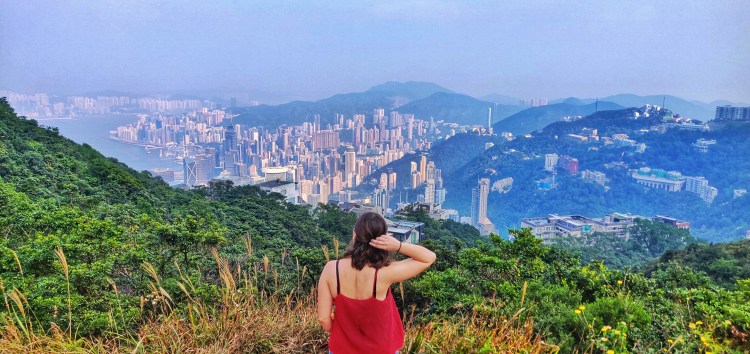
After a great struggle and looking like complete and utter tourists we manage to find our way out of the mall and we hike around for 30 minutes, then go all the way to Victoria Peak (1 hour uphill) and the gardens. The view from Victoria Peak was absolutely unbeatable!

View from Victoria Peak

We then hike the Morning Trail back to the peak view-mall and all the way back to Central through the Western flat area (my poor legs, on a cheese toasty!)

By the time we reach the hostel we are so utterly tired we go to bed with no dinner, the original plan was to watch the Symphony of Lights, but no chance! Another 4am sleepless night though.

End of Day 3 – 14/11/2019

Day 2: Hong Kong

Today we got up at 11 am, after all, we did not get much sleep due to the nosy fan and the constant smell of food from the neighbours (who eats garlic throughout the night? Are our neighbours trying to ward off vampires?)

We go out, in all honesty, a bit scared of the big city but we soon ease into it. Hong Kong is definitely a Western-accommodating Asian metropolis. We walk around the Avenue of Stars and take the typical photo next to Bruce Lee (meanwhile I feel like crap whilst calling home, jet-lag hitting hard).

Now the adventure begins, after not eating in at least 24h, we try to find veggie food (that will be gentle to my increasingly achey tummy). We end up in a mall food court, everyone who is eating around us seem like locals who work at the mall, and in a Thai stall. I order steamed rice and sticky mango rice and Pete orders chicken.

As Kowloon park was nearby, we walk over and… absolutely love how peaceful it is. We then wander to the markets up town, first the Jade market, where I decide we should leave after being grabbed and adorned with multiple bracelets. The Temple Street market. Too many nice things there! but sadly most of them I can’t carry for 9 months.

We head back to the hostel after stocking up in some Oreos.

End of Day 2 – 13/11/2019

Day 1: Hong Kong

We land, after 12 painful hours of British Airways economy and having drank too much wine at the wrong times. My stomach has certainly not agreed with it at least.

We had read all guides and recommendations so we knew we needed bus A21 from the airport to Tsim Sha Tsui. The journey was easy and after all Western media scaring us about the riots, not, we did not find any tear gas on our street (Nathan Road)

The expectations of our accommodation were not high, we did book the cheapest after all, but the lack of sleep, jet lag and shock of being at the other end of the world really strike me. The entrance to the hostel is confusing and requires a 10 floor elevator that has seen better days (for the record, I am actually quite scared of lifts and enclosed spaces). The room is basically a tiled bathroom with a bed and a TV.

My instant reaction is “I am not staying here for 6 nights” but I don’t have much of a choice and I soon start feeling better about it (although my stomach isn’t). We have a nap and head to our first ever 7-Eleven, then we are unable to sleep until 4 am.

End of Day 1 – 12/11/2019

Cat Ba – An alternative to Ha Long Bay

Introduction

Ha Long Bay is a natural wonder of emerald waters and limestone pillars rising up in islets topped up with small forests and ecosystems, incredible caves and scattered with traditional boats. Yes, Ha Long Bay is the most popular tourist hotspot in Vietnam, if there was only one thing you could see in the country, debatably this would probably be it. But what if there was a way to avoid the masses and crowds and experience this limestone wonder in a more quiet way?

Welcome to Lan Ha Bay!

Lan Ha Bay is as beautiful as her big sister and (when we visited, back in 2019) much less crowded. 

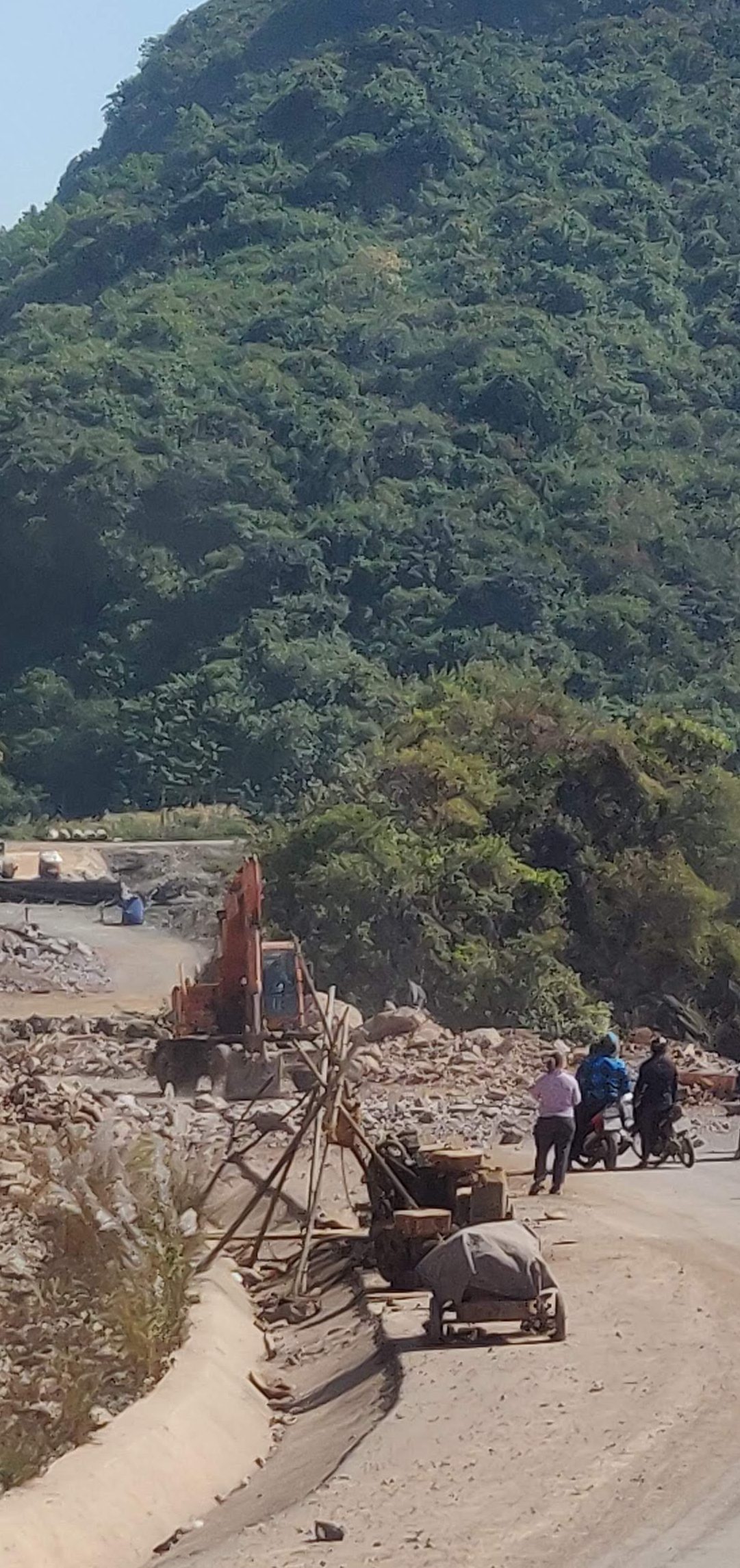
Our arrival in Cat Ba was a bit different, after a bus to the ferry port and then a ferry across to the island, a bus was meant to take us to Cat Ba town, however, falling rocks from the cliff meant we had to wait for ages in the aircon freezer bus. But once we arrived, we were taken aback by the cute little town.

This was our experience in Cat Ba and Lan Ha Bay!

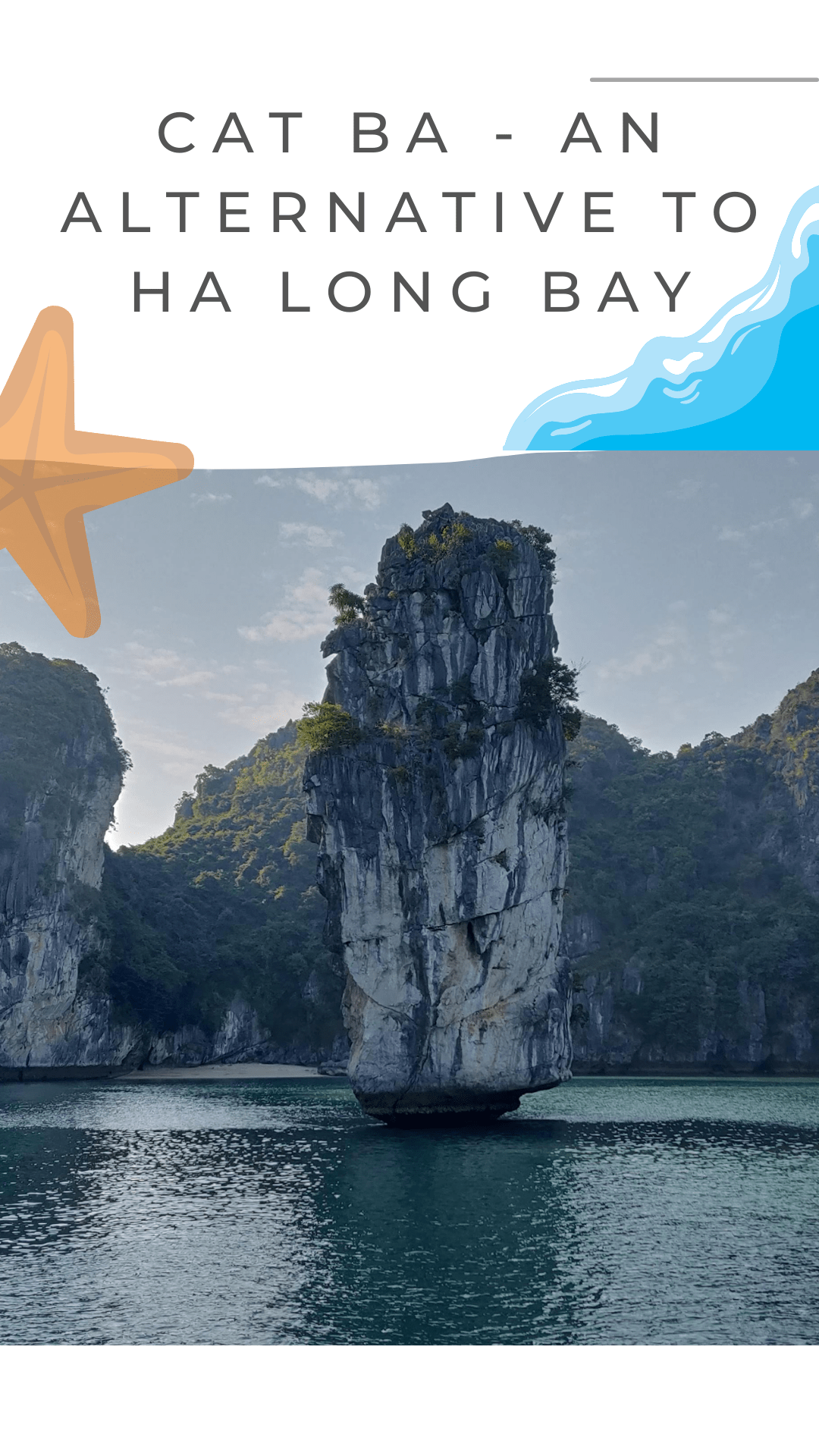
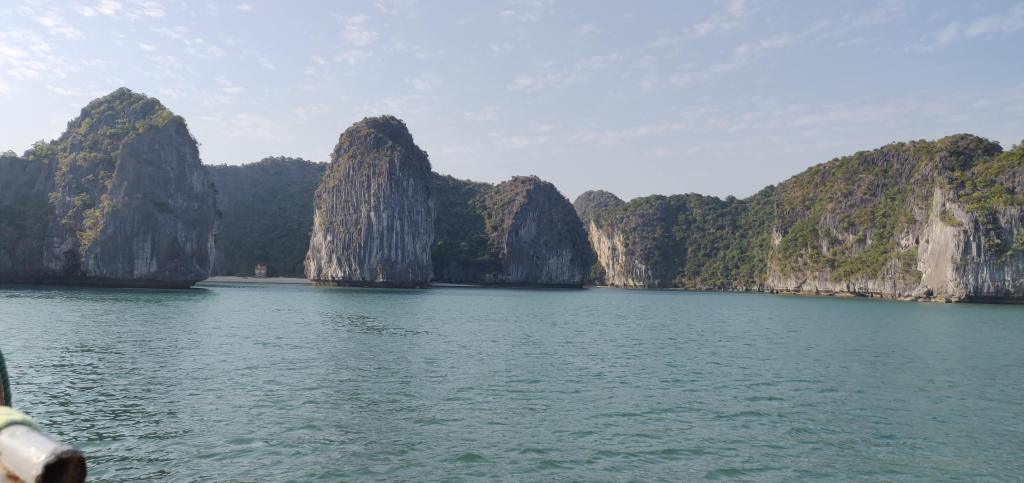
Limestone formations in Lan Ha Bay

How to get to Lan Ha Bay from Hanoi

Get a bus from Hanoi to Cat Ba:

We always use 12go Asia to book our buses. The one we booked for this trip took us from Hanoi to a ferry port in Haiphong and then, when we crossed the water we got on another bus to Cat Ba town where there is plenty of accommodation, yummy food and beaches around.

Get a train from Hanoi to Haiphong and then a ferry across to Cat Ba town:

For this option, you need to seek transport from the train station in Haiphong to the ferry port. We always used Grab (Vietnam’s version of Uber) for this as we already know the rate and does not require negotiation, if you prefer to negotiate, there are lots of xe ôm (shared motorbikes) normally available in Vietnamese cities.

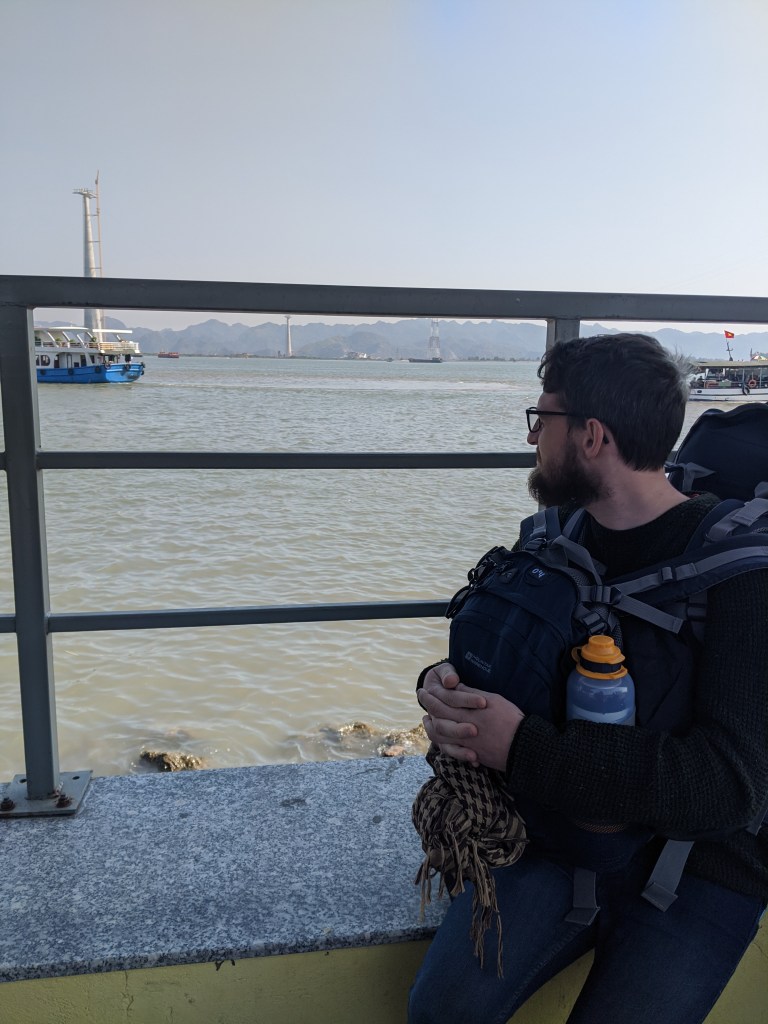
Pete enjoying the ferry crossing at Haiphong
Locals clearing the rockslide, this is the thing about travelling, unexpected things can and will happen!

What to do in Cat Ba

Lan Ha Bay

Because of our time constraint we actually booked one of the boat tours in Cat Ba town to take us to the main places we wanted to visit within Lan Ha Bay. These were:

Cua Van Fishing Village: This village is completely set in the water, here traditional fishing structures are laid over the turquoise waters and life just goes on as normal. Our guide explained to us that normally, people who were casted out of the society in the cities were sent to live here and generations have just stayed living the traditional way.

Monkey Island: Gorgeous limestone island with an scary ass climb (see relevant post) 

Van Boi Beach: This was an incredible beach only reachable by swimming from the boat. I personally didn’t swim there as I am not great at swimming but my friend who I travelled with did and seemed very happy with the experience. They also swam under a cave to reach an opening. 

Limestone caves and openings: This was a bit random, but our guide took us to this amazing cave we had to kayak under, which was incredible. But it got even better when we arose in this circle of limestone surrounded by a forest, opened from the top. It was one of the most tranquil spots I ever experienced. 

Lan Ha Bay Overnight Cruise

Lots of visitors opt for the overnight cruises to experience Lan Ha Bay, there are plenty of options within Cat Ba town so it is worth shopping around to get the best deal.

Hike Cat Ba National Park

Cat Ba’s National Park, which holds the most endangered primate on earth, the golden-headed langur is definitely worth a visit. There are lots of hiking trails to follow but they recommend following a guide to not get lost. One of the most incredible hikes is the one to Viet Hai village across the island.

Walk along the coastline in Cat Ba town

For a less strenuous walk, we followed a trail along the coastline from Cat Ba town to the beaches nearby, the beaches were empty when we visited as it was low season (and a bit chilly) but that made the experience even more beautiful, the sunset on our way back was just gorgeous. Also, there are lots of seafood restaurants by the sea on the way to stop and have great food!

Map of walk along coast in Cat Ba town

Views along the coastline path in Cat Ba town

Overview

We really didn’t know what to expect when we arrived at Hanoi, it was our very first contact with Vietnam so it was a double surprise. We loved the city so much we actually decided to extend our stay there and we are planning to come back soon after the pandemic has relaxed and travel restrictions are lifted.

Hanoi left a lasting impression, it is busy, noisy, full of fumes and the weather can be quite moody but it is also vibrant, colourful, and very tasty. We look forward to visiting you again, Hanoi!
Sunset over Tay Do lake, Hanoi

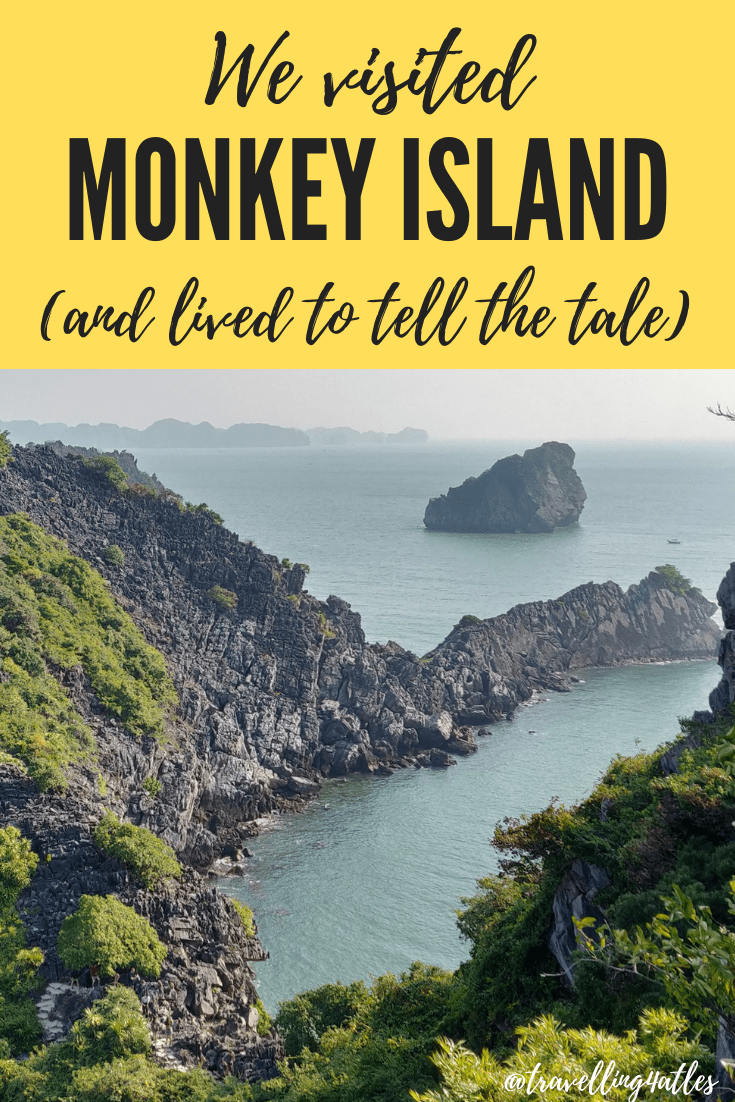
We visited Monkey Island in Vietnam (and lived to tell the tale)

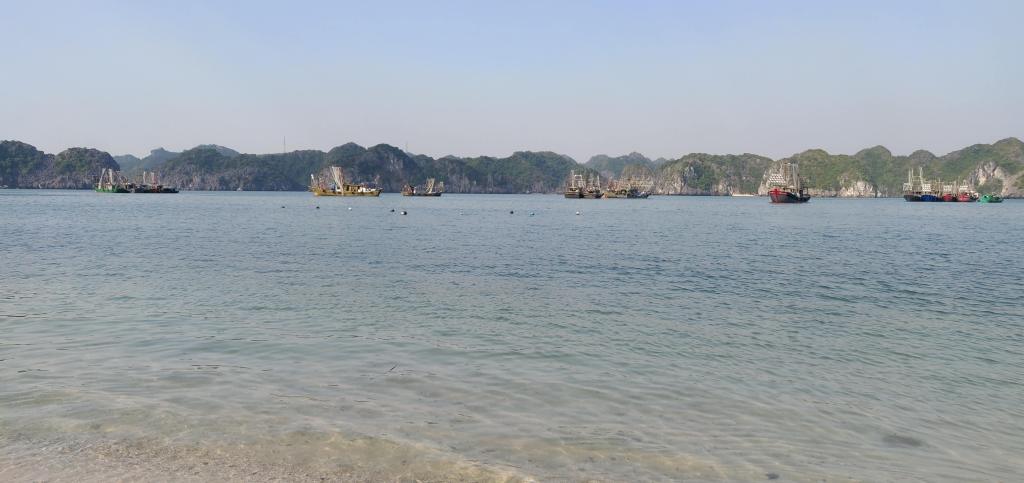
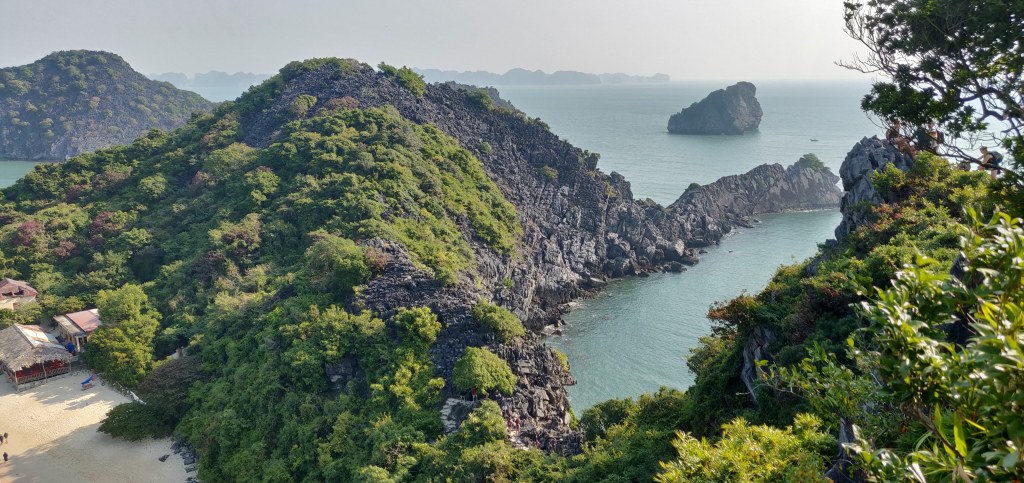
Monkey Island is a paradise island located in Lan Ha Bay, just off Cat Ba Island. It is a limestone island formed in a similar way to the whole geography of the area and it has the most incredible beach with crystalline waters overseeing the bay. Towering blocks of limestone with forests are scattered around in the emerald waters in the distance. Does it sound like heaven?

Yes, because it could be, there is even a resort in this island for peace and tranquillity, there are a few monkeys around who will steal your things (we saw them steal a man’s wallet and then proceeded to empty its contents one by one) but the beach is gorgeous and peaceful.

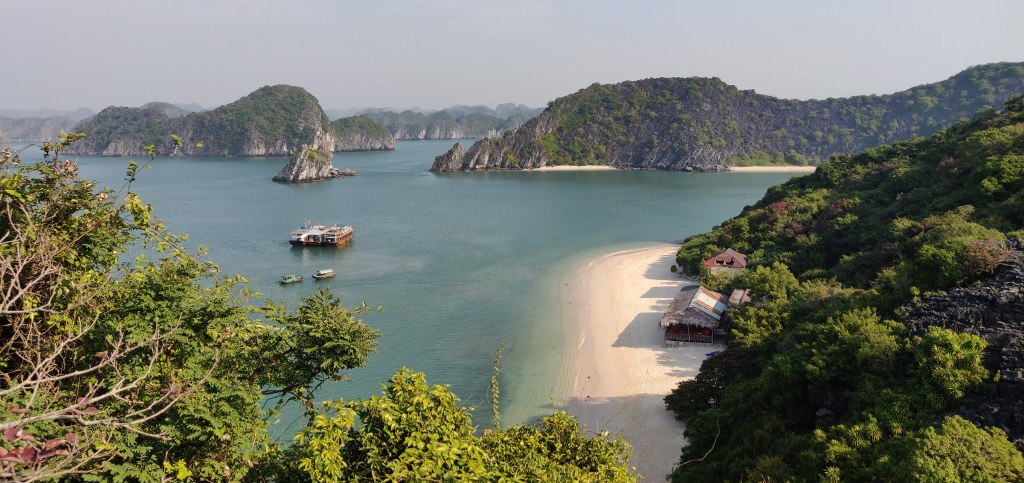
Monkey Island Beach overlooking Lan Ha Bay

However, we went to the island as part of a tour and had what was probably one of the scariest things we have done on our trip to Vietnam.

We were not sure what to expect in Monkey Island when we went there, to be completely honest. We arrived on the boat that was taking us around the tour. There were more tourist boats there too, there was a gorgeous white sand beach and (yes, monkeys), we sat down thinking the plan was to chill by the beach for a bit but our guide was ushering us to follow him up this jungle trail that started near the beach

He then started to give us rock climbing 101 lessons such as “make sure to keep three points in contact at all times”, bear in mind there were some people in our group wearing flip flops or open toed shoes (although he had warned us not to wear them, we never expected the reason).

View of the beach from the trail

When we asked him if the climb was hard he said no, so we carried on. The trail started easy, just hiking up some paths within the jungle, but as we got closer to the top we started to get harder.

Horizontal trails became more vertical where we had to hang onto rocks to jump up. It didn’t help that there were people behind waiting to get through. It was a bit stressful because it kind of felt like we were in a queue from where we couldn’t get off, but the path was getting harder, and some people were more edgy as things got tougher (including myself).

We then started having to jump over limestone cliff edges (although not too widely separated) they were quite high. Someone who came with us lost her flip flop in one of those and someone else from another group cut themselves on the sharp rocks. 

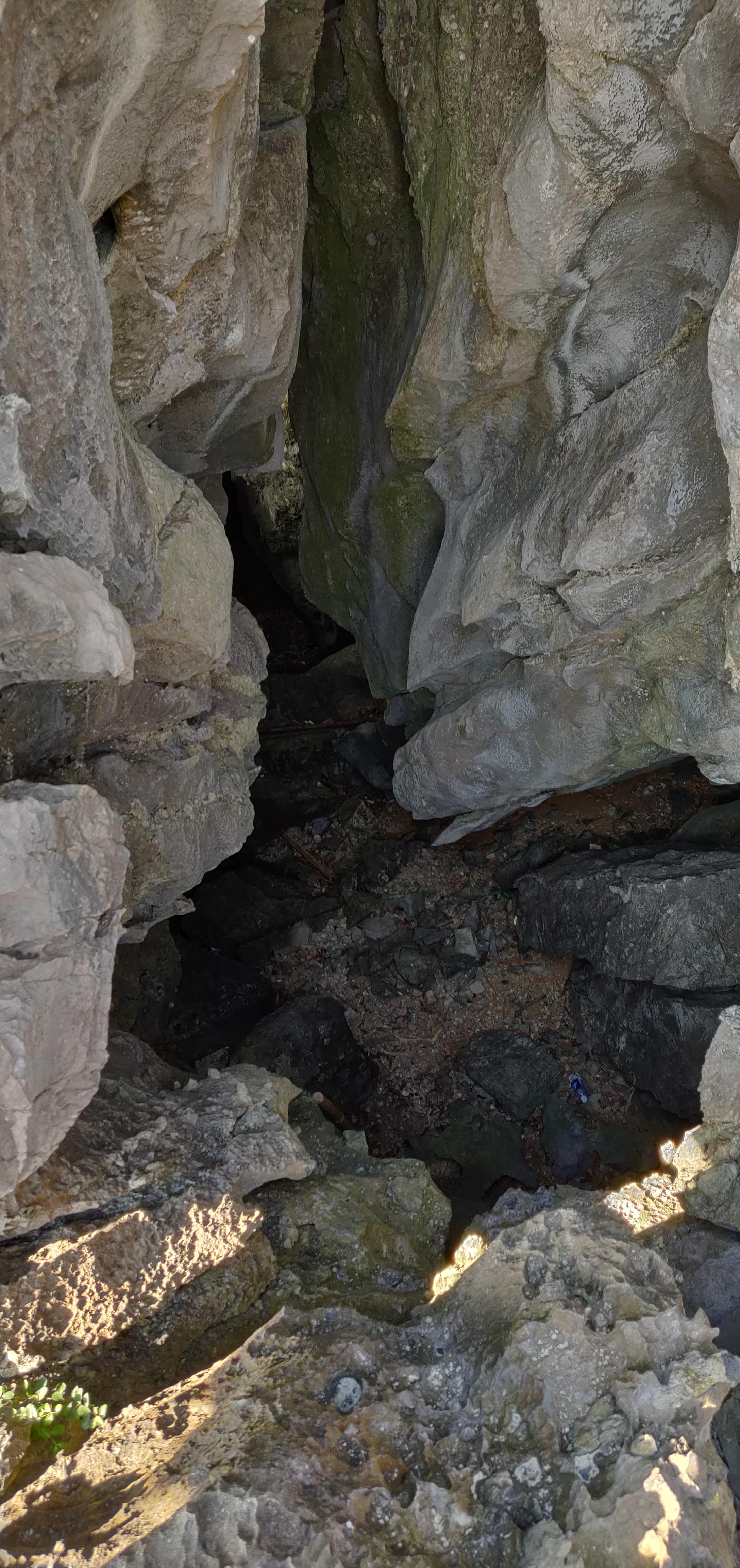
Holes and edges found in the hiking trail

We then approached this scary huge ledge, the mechanism to get to the other side was by grabbing onto a dead tree branch (yes, everyone had to, all the tourists waiting and us, every single one) and it was the only way up or down.

I mean, the view was amazing but I wish they would have warned us because we were so ill prepared, physically and mentally!
The views from the top of Monkey Island

Some questions remain here, as we went back in 2019…

Are tourists still allowed to visit Monkey Island? It did not seem a very sustainable way to visit this place, it was so crowded.
Should tours be even taking tourists on these dangerous hikes when they are clearly not prepared? Some of the tourists weren’t even accompanied, so I do hope there haven’t been any accidents related.

And most importantly… is that tree branch still there, serving newbie climbers on their journey atop Monkey Island?

If you join one of these tours and are not too keen on risking your life, footwear or just enjoy relaxation, maybe choose to stay back at the beach 🙂

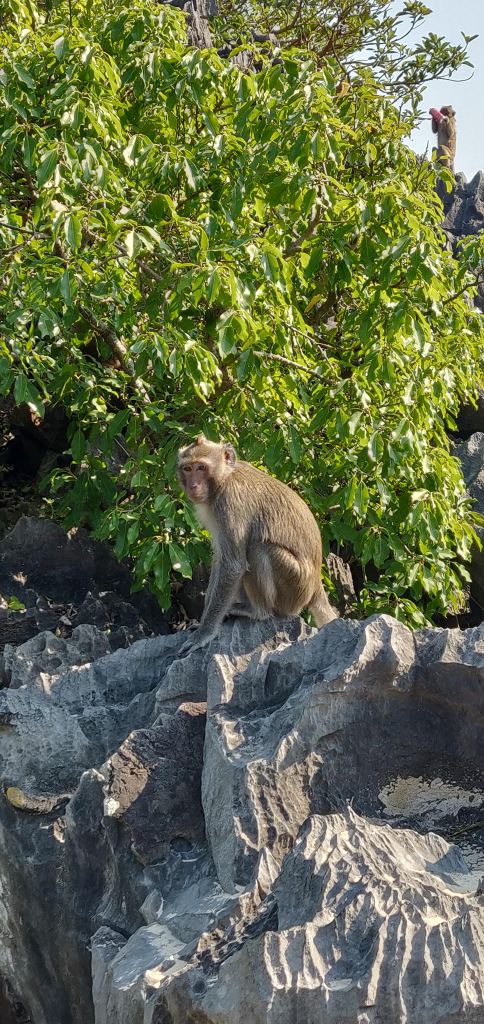
Monkey Island monkey, the legitimate kings of the place and probably the only ones who should be climbing up to the top

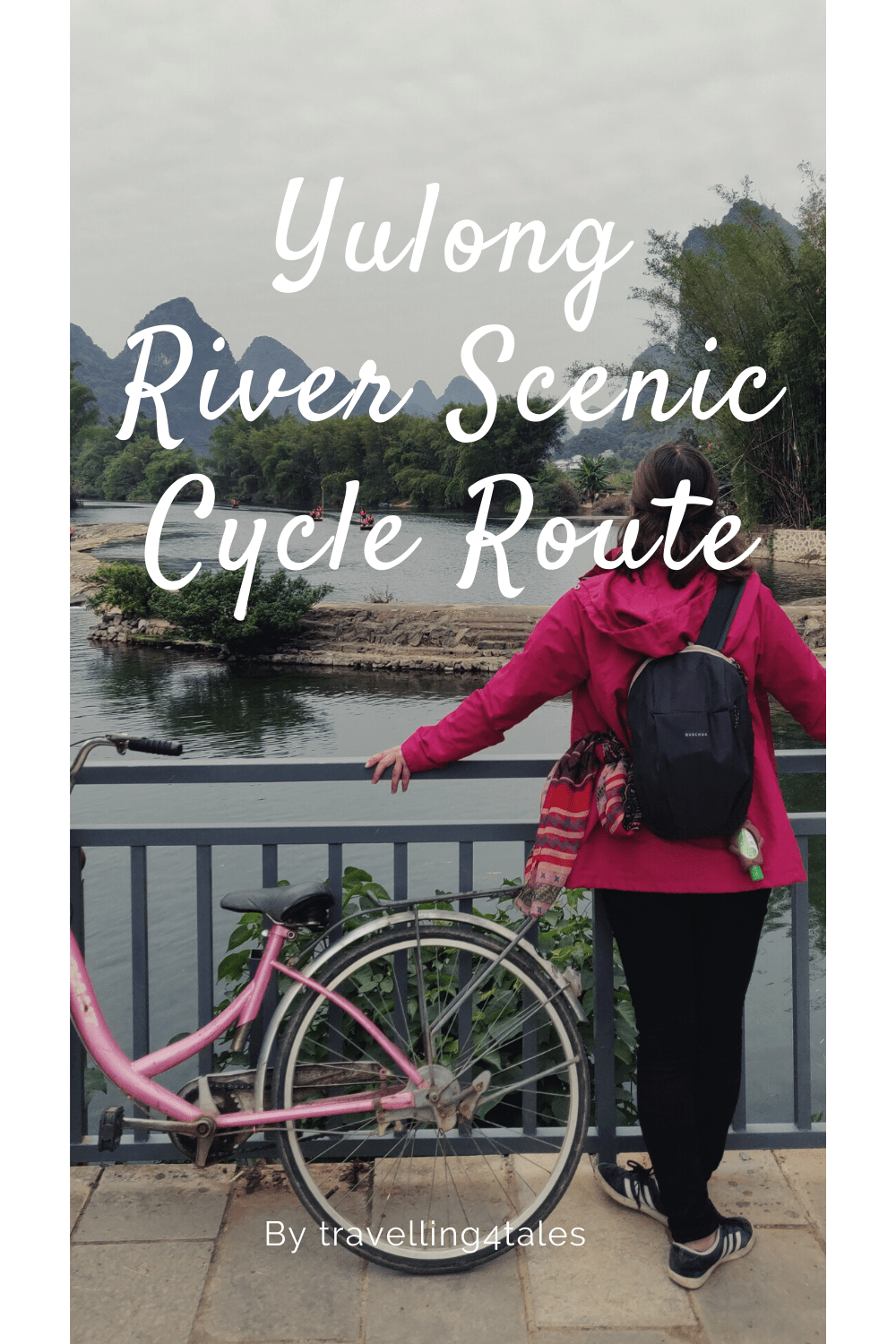
Yulong River Scenic Cycle Route

One of the highlights of our time in Yangshuo was definitely cycling along the Yulong river and the countryside surrounding the town. Neither of us are sporty; we like gaming, reading and watching Netflix so… What did we decide?

To cycle 27km along the Yulong river. Well, actually, we were meant to cycle much less than that but this is what actually happened:

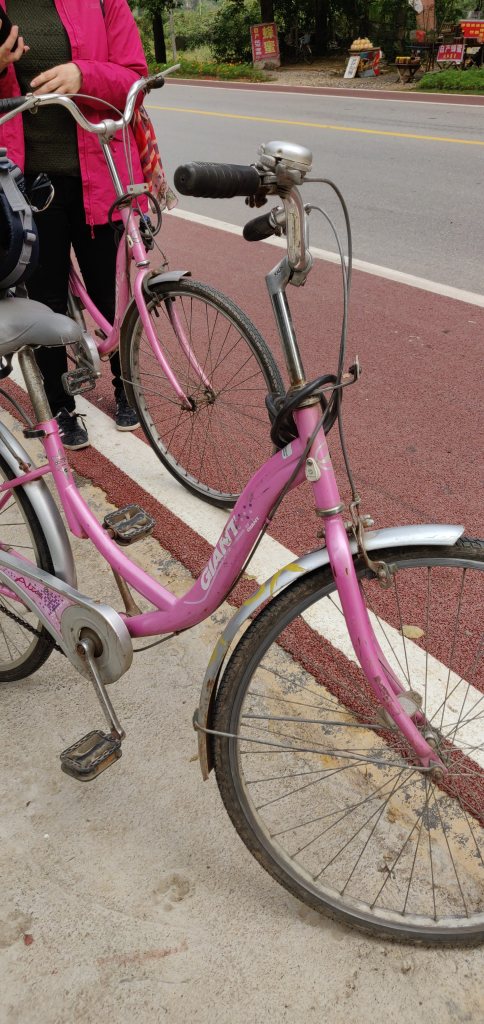
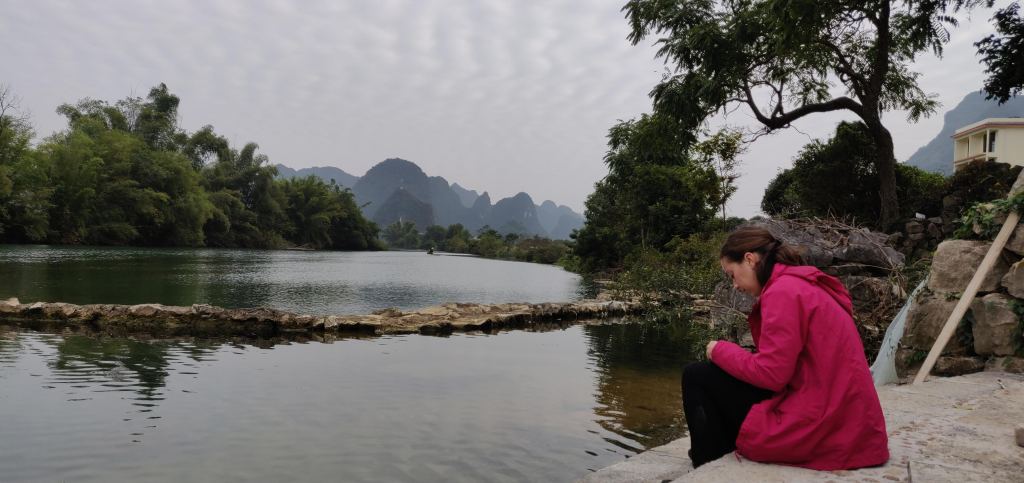
We hired our bikes from our hostel, we hired two city bikes for 10RMB each. We started from our hostel and cycled to the start of the cycle path through Yangshuo (note: mopeds are the rulers of the roads, trying to keep up was definitely something else) we then reached the cycle path by Gongnong bridge, following the river up towards the Dragon bridge. The path was smooth, other than a few bridges with stairs where we had to pick our bikes up. However, it was worth the effort, what a gem! The calm river flow was only ever interrupted by some makeshift single line rock bridges where locals were washing their laundry, there were green mountains surrounded the area and farmers working their lands. 

Notoriously stingy as @Travelling4tales are, we actually decided to hire city bikes, if we had hired mountain bikes I am sure it would had been a much easier cycle

We stopped to buy some oranges from a very cheerful woman in her 80s and we made it to the Dragon bridge. Our plan from the beginning was to get a bamboo raft and take the bikes (and us) downstream to the start so we will only have to cycle part-way back to Yangshuo, well, that just didn’t happen.

When we actually, finally reached the Dragon bridge, nobody would take us and the bikes on the raft (apparently they started regulating health and safety on the rafts) and we were very lost. We carried on cycling upstream as our maps had flagged another raft station. It turns out that after some very confusing translating and a lot of money handling (we think we paid 250RMB for the raft and 20RMB per bike transported) we managed to reach an agreement. We were going to go down on the raft and they were going to drive our bikes to the end point (wherever that might be). 

Orange eating break to admire the small rock bridges along the river

We got on the raft and started the descent, the rower was really not motivated, his interest was more in loudly gossiping with his coworkers than anything else and as a result we ended up with completely soaking wet feet and bums (every time you go down a rapid, the raft would submerge a bit). The romanticism and mysticism of the landscape was just overthrown by the anticlimactic chat and our freezing feet and buttocks.

Raft leaving the station by the Dragon Bridge

What seemed like 1h later, we arrived at an unknown location somewhere along the Yulong river, we got off the raft on our wet clothes and aimed to try to locate the bikes, after asking around we found them next to a dumpster. To our surprise, we were not at the end of the path as we thought but halfway through and with only 2h of sunlight left! Now, super cold and grumpy, we rushed our way back to town and the hostel to get a steamy shower. 

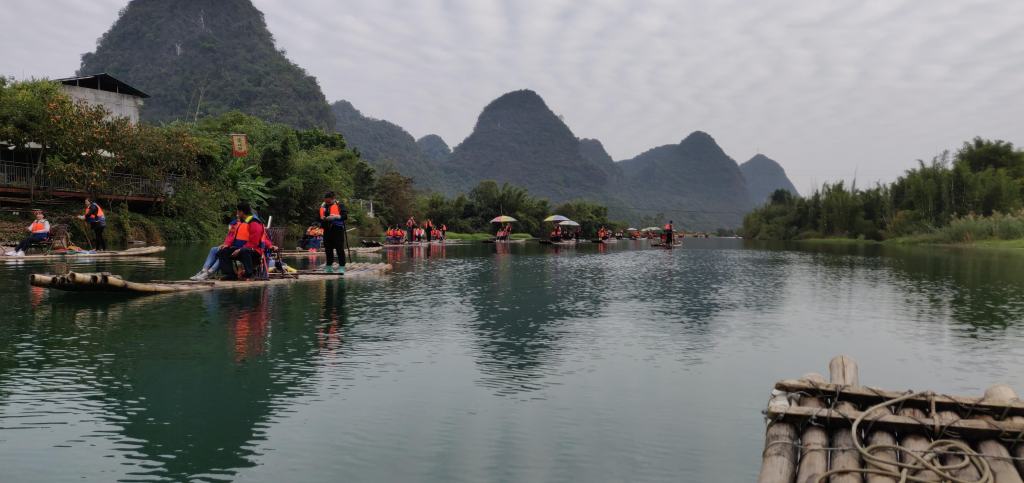
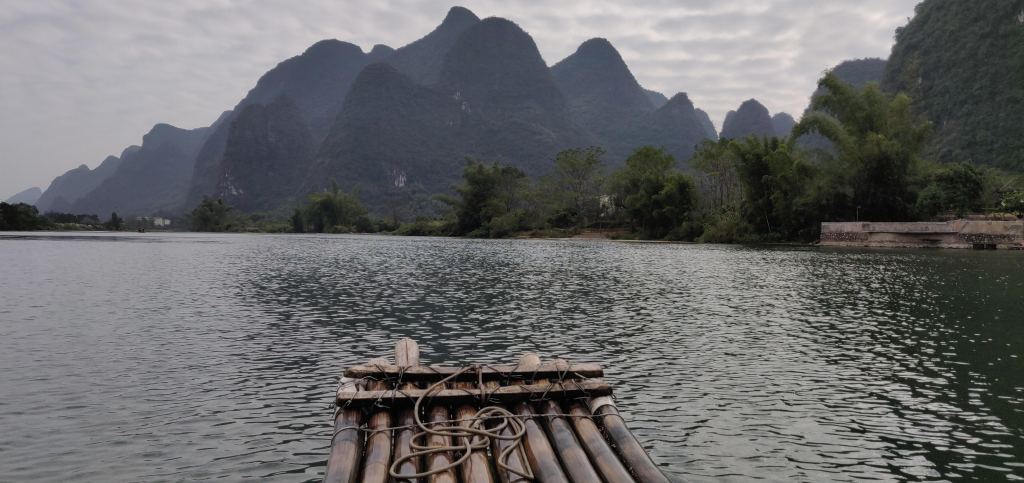
Bamboo raft(ing) along the Yulong River

It goes without saying, we ached the next day. But it was still all worth it!

Design a site like this with WordPress.com
Get started